Have you ever stood on a stage and faced a silent audience? Your heart beats fast as every eye turns to you.
An audience is a group of people who watch or listen. They may sit in a hall, a theatre, or at home.
Audience means the people who hear a speech or see a show. A good speaker reads the room and keeps them with him.
These words help students, bloggers, writers, and daily English users. They make your speech clear and your writing fresh and exact.
1. Spectators
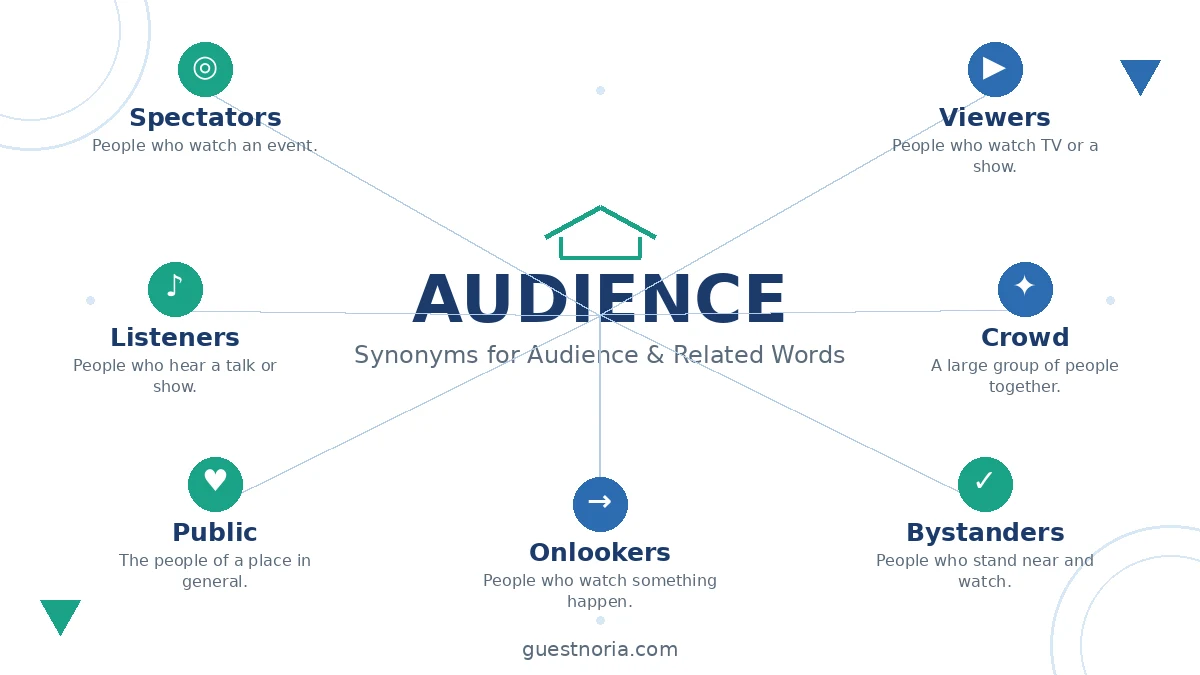
Meaning: Spectators means people who watch an event.
Examples:
- The spectators cheered loudly when the winning goal was scored.
- Thousands of happy spectators filled the big stadium that day.
2. Viewers
Meaning: Viewers means people who watch TV or a show.
Examples:
- The viewers loved the new drama series on TV.
- Millions of viewers around the world watched the final match.
3. Listeners
Meaning: Listeners means people who hear a talk or show.
Examples:
- The listeners sat still and quiet through the long speech.
- Radio listeners called in with their views and questions.
4. Crowd
Meaning: Crowd means a large group of people together.
Examples:
- A huge crowd gathered outside the hall early in the morning.
- The crowd clapped and shouted with joy all through the night.
5. Public
Meaning: Public means the people of a place in general.
Examples:
- The public loves a good story told in simple words.
- The show opened to the general public last Friday evening.
6. Onlookers
Meaning: Onlookers means people who watch something happen.
Examples:
- Onlookers watched the bright parade pass slowly by.
- A few onlookers took photos of the scene with their phones.
7. Bystanders
Meaning: Bystanders means people who stand near and watch.
Examples:
- Bystanders helped the old man up after the fall.
- The bystanders watched the street show with big smiles.
8. Witnesses
Meaning: Witnesses means people who see an event happen.
Examples:
- The witnesses told the police exactly what happened that night.
- Two brave witnesses saw the whole show from start to end.
9. Fans
Meaning: Fans means people who love a team or star.
Examples:
- The fans sang songs for their team all through the game.
- Fans waited for hours in line just to see her.
10. Followers
Meaning: Followers means people who support or follow someone.
Examples:
- Her loyal followers read every post she writes online.
- The singer thanked his loyal followers at the end of the show.
11. Congregation
Meaning: Congregation means people gathered in a church.
Examples:
- The congregation sang the morning hymn together in one voice.
- The whole congregation stood up together for prayer.
12. Assembly
Meaning: Assembly means a group gathered for a purpose.
Examples:
- The school assembly met in the big hall each morning.
- An assembly of workers heard the good news with joy.
13. Gathering
Meaning: Gathering means a group of people together.
Examples:
- A small gathering met at her home for tea and talk.
- The gathering listened to the old tales late into the night.
14. Throng
Meaning: Throng means a large crowd of people.
Examples:
- A noisy throng filled the busy market square that day.
- The eager throng pushed slowly toward the stage.
15. Multitude
Meaning: Multitude means a very large number of people.
Examples:
- A great multitude came to hear him speak that day.
- The multitude waited in the hot sun for many long hours.
16. Attendees
Meaning: Attendees means people who attend an event.
Examples:
- The attendees took notes during the talk.
- All attendees received a free booklet.
17. Patrons
Meaning: Patrons means people who support a place or art.
Examples:
- The patrons filled the theatre seats.
- Patrons of the arts fund the show.
18. Guests
Meaning: Guests means people who are invited to an event.
Examples:
- The guests enjoyed the wedding speeches.
- Guests clapped as the host spoke.
19. Readers
Meaning: Readers means people who read a book or post.
Examples:
- The readers loved the short story.
- Her readers ask for more each week.
20. Subscribers
Meaning: Subscribers means people who follow a channel or paper.
Examples:
- The subscribers watch her videos each day.
- New subscribers joined after the show.
21. Visitors
Meaning: Visitors means people who come to a place.
Examples:
- The visitors toured the old museum.
- Visitors filled the gallery on Sunday.
22. Turnout
Meaning: Turnout means the number of people who attend.
Examples:
- The turnout for the show was huge.
- A good turnout filled the small hall.
23. House
Meaning: House means the audience in a theatre.
Examples:
- The house laughed at every joke.
- A full house watched the first night.
24. Gallery
Meaning: Gallery means the people watching from above.
Examples:
- The gallery cheered the young players.
- The gallery in the court listened well.
25. Hearers
Meaning: Hearers means people who hear a speech.
Examples:
- The hearers nodded at his words.
- A room of hearers sat in silence.
26. Watchers
Meaning: Watchers means people who watch something happen.
Examples:
- The watchers stood by the river bank.
- Watchers saw the lights in the sky.
27. Beholders
Meaning: Beholders means people who see a thing.
Examples:
- The beholders stared at the fine art.
- Beauty lies in the eyes of beholders.
28. Jury
Meaning: Jury means people who judge a case or contest.
Examples:
- The jury listened to both sides.
- A jury of experts chose the winner.
29. Congregants
Meaning: Congregants means members of a church group.
Examples:
- The congregants sang in sweet harmony.
- Congregants filled the pews on Sunday.
30. Devotees
Meaning: Devotees means loyal fans of a person or art.
Examples:
- The devotees filled the hall each night.
- Devotees travel far to see him play.
Conclusion
Learning synonyms for audience makes your writing clear and your speech exact. You can describe a crowd, a group of listeners, or a hall of viewers with the right word. Try these words in emails, essays, and daily talks. Look up the full meaning of audience in the Cambridge Dictionary and use it with care every day. Keep a small notebook of new words and read it each morning. Share what you learn with friends and family, and soon these words will feel natural in your speech. Small daily practice will make your English strong and bright.