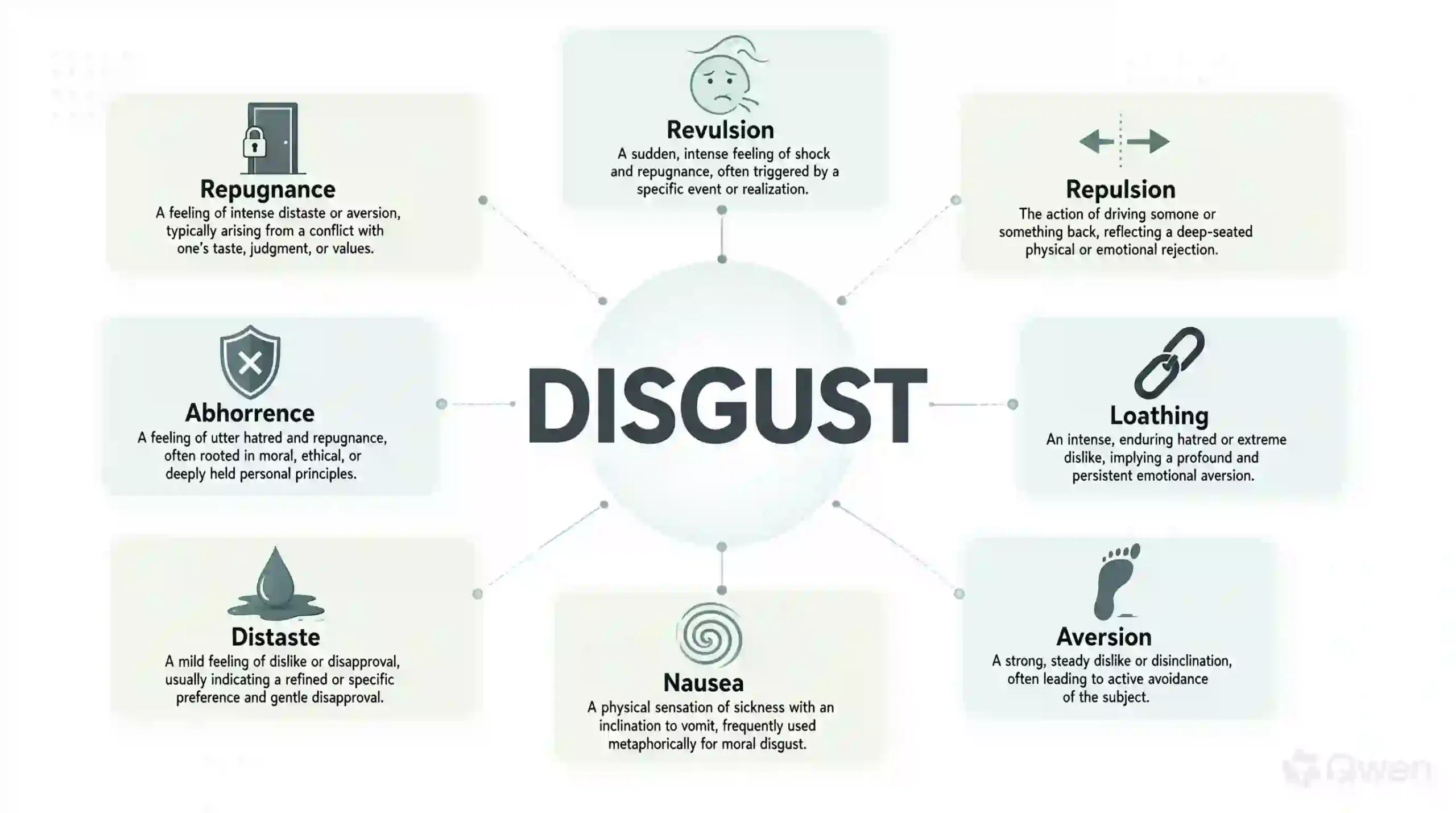
The word disgust describes a strong feeling of dislike or dislike toward something unpleasant. It helps express negative feelings.
For example, a bad smell may cause disgust. People use this word to share their reactions and emotions.
Learning synonyms for disgust can make your English more clear. Words like revulsion, hatred, and dislike offer different ways to express feelings.
Students, bloggers, and content writers can use these words in essays and articles. They also help daily English users communicate better.
1. Revulsion
Meaning: Revulsion means a very strong feeling of dislike toward something unpleasant.
Examples:
- She felt revulsion when she smelled the rotten food.
- His face showed revulsion at the dirty room.
2. Loathing
Meaning: Loathing means a very strong feeling of hate or dislike.
Examples:
- He felt loathing toward the cruel behavior.
- She spoke about the unfair rule with loathing.
3. Hatred
Meaning: Hatred means a very strong feeling of dislike toward someone or something.
Examples:
- His hatred of lies was clear to everyone.
- She felt hatred toward the unfair treatment.
4. Abhorrence
Meaning: Abhorrence means a deep feeling of dislike for something wrong or unpleasant.
Examples:
- He has an abhorrence of cruelty.
- Her abhorrence of bullying made her speak up.
5. Repulsion
Meaning: Repulsion means a strong feeling that makes you want to stay away from something.
Examples:
- The bad smell caused repulsion among the guests.
- He felt repulsion when he saw the spoiled meal.
6. Nausea
Meaning: Nausea means a sick feeling in your stomach.
Examples:
- The smell of the trash made me feel nausea.
- The dirty water caused nausea in some visitors.
7. Distaste
Meaning: Distaste means a feeling of dislike for something.
Examples:
- She has a distaste for rude behavior.
- He showed distaste for the bitter drink.
8. Dislike
Meaning: Dislike means not liking someone or something.
Examples:
- I have a strong dislike for loud noises.
- His dislike of cold weather is well known.
9. Contempt
Meaning: Contempt means a strong feeling that someone or something is not worthy of respect.
Examples:
- She looked at the dishonest act with contempt.
- His contempt for cheating was clear.
10. Scorn
Meaning: Scorn means a strong feeling of disrespect toward someone or something.
Examples:
- He showed scorn for the silly excuse.
- The crowd reacted with scorn to the rude comment.
11. Antipathy
Meaning: Antipathy means a strong feeling of dislike toward someone or something.
Examples:
- She felt antipathy toward unfair rules.
- His antipathy for loud music was easy to notice.
12. Abomination
Meaning: Abomination means something that causes strong dislike or disgust.
Examples:
- He called the dirty kitchen an abomination.
- The spoiled food was an abomination to everyone.
13. Offense
Meaning: Offense means a feeling of being upset or hurt by something unpleasant.
Examples:
- She took offense at his rude words.
- His joke caused offense among the guests.
14. Horror
Meaning: Horror means a strong feeling of fear or shock caused by something unpleasant.
Examples:
- She felt horror when she saw the damaged house.
- His face showed horror at the terrible news.
15. Ick
Meaning: Ick is an informal word for a sudden feeling of dislike or disgust.
Examples:
- The slimy texture gave me the ick.
- That dirty habit gives her the ick.
16. Sickness
Meaning: Sickness means feeling unwell, sometimes because something is unpleasant.
Examples:
- The smell made him feel sickness.
- She felt sickness after seeing the spoiled food.
17. Loathsomeness
Meaning: Loathsomeness means the quality of being very unpleasant or disgusting.
Examples:
- The loathsomeness of the dirty place shocked us.
- Everyone noticed the loathsomeness of the spoiled meal.
18. Odium
Meaning: Odium means strong public dislike or hate toward someone or something.
Examples:
- His dishonest actions brought public odium.
- The unfair decision earned odium from the community.
19. Detestation
Meaning: Detestation means a very strong feeling of dislike or hate.
Examples:
- She has a deep detestation of cruelty.
- His detestation of lies affects his friendships.
20. Abhorrence
Meaning: Abhorrence means a strong feeling of hate or disgust toward something.
Examples:
- Her abhorrence of violence was clear.
- He spoke with abhorrence about animal cruelty.
21. Repugnance
Meaning: Repugnance means a strong feeling of disgust toward something unpleasant or wrong.
Examples:
- The smell filled her with repugnance.
- He felt repugnance toward the dishonest plan.
22. Displeasure
Meaning: Displeasure means a feeling of being unhappy or annoyed about something.
Examples:
- The teacher showed displeasure at the noisy class.
- She expressed displeasure with the poor service.
23. Disfavor
Meaning: Disfavor means a feeling of dislike or lack of approval.
Examples:
- The plan fell into disfavor with the team.
- He viewed the unfair rule with disfavor.
24. Aversion
Meaning: Aversion means a strong feeling of dislike for something.
Examples:
- She has an aversion to bitter food.
- His aversion to crowded places is well known.
25. Antagonism
Meaning: Antagonism means a strong feeling of anger or dislike toward someone.
Examples:
- There was clear antagonism between the two groups.
- His words created antagonism among his classmates.
26. Revilement
Meaning: Revilement means harsh words that show strong dislike or anger.
Examples:
- The speech was filled with revilement.
- Online revilement made the discussion unpleasant.
27. Disapproval
Meaning: Disapproval means showing that you do not agree with or like something.
Examples:
- Her parents showed disapproval of his rude behavior.
- The teacher expressed disapproval of the cheating.
28. Disdain
Meaning: Disdain means a strong feeling that something or someone is not good enough.
Examples:
- He showed disdain for the careless work.
- She spoke with disdain about the unfair offer.
29. Repulsiveness
Meaning: Repulsiveness means the quality of being very unpleasant or disgusting.
Examples:
- The repulsiveness of the smell made us leave.
- Everyone noticed the repulsiveness of the dirty water.
30. Abhorrent
Meaning: Abhorrent means extremely unpleasant or completely unacceptable.
Examples:
- Bullying is abhorrent to many people.
- She found the cruel behavior abhorrent.
Conclusion
Learning synonyms for disgust helps improve your writing, blogging, speaking, and daily communication. Words like revulsion, loathing, distaste, and repulsion help you express strong feelings in different ways. Practice these words in emails, essays, and daily conversations. Always choose a word that matches your meaning. With regular practice, you can build a stronger vocabulary and make your English more natural and clear.