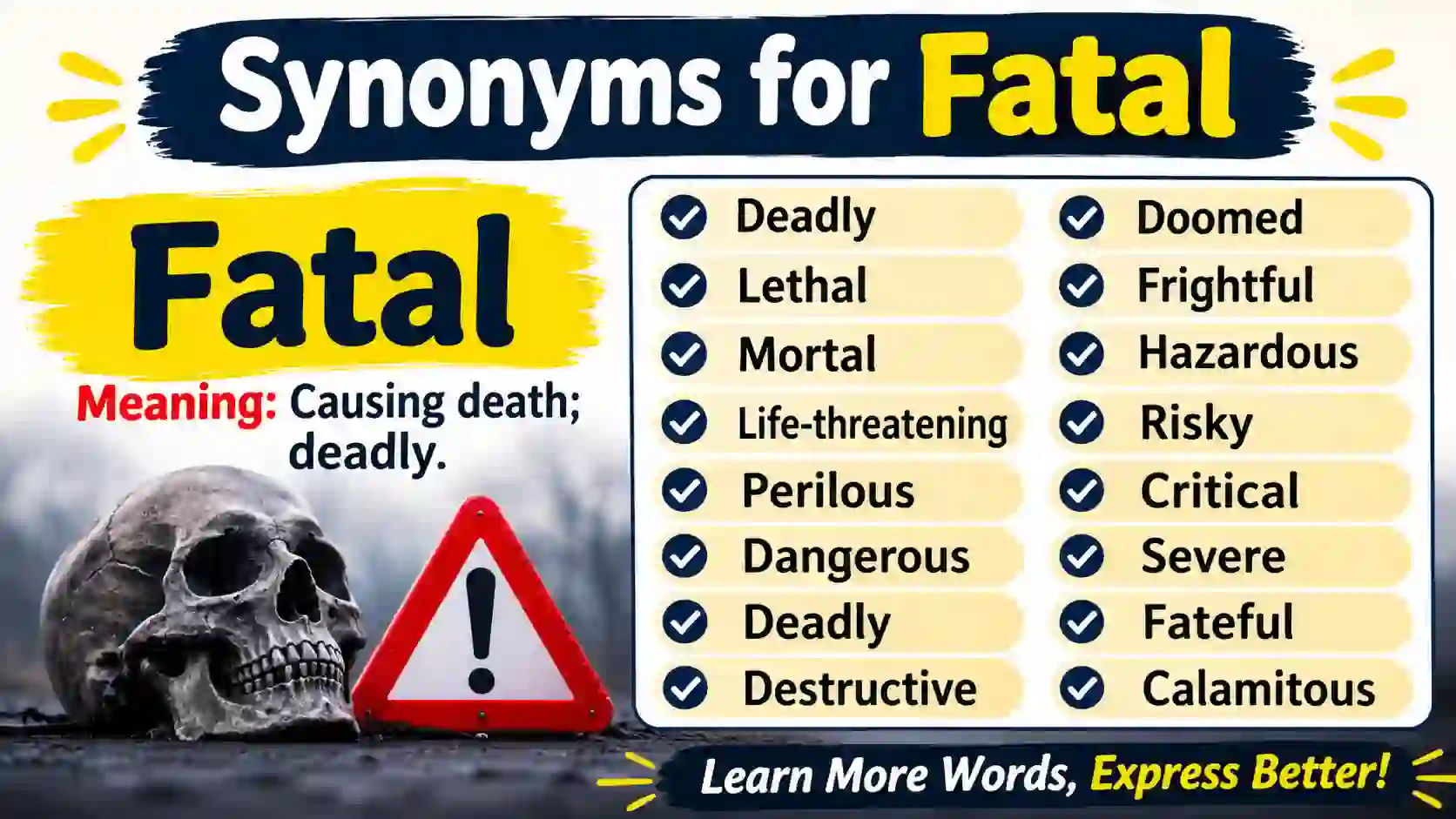
The word fatal describes something that causes death or leads to a very serious result.
For example, a fatal accident can cause someone to lose their life.
Learning synonyms for fatal helps you understand different words with similar meanings.
Students, bloggers, and writers can use these words to make their writing clearer, accurate, and more natural.
1. Deadly
Meaning: Deadly means something that can cause death.
Examples:
- Some snakes have deadly venom.
- The storm created deadly conditions in the area.
2. Lethal
Meaning: Lethal means able to cause death.
Examples:
- The substance can have lethal effects.
- Doctors warned about the lethal risks of the disease.
3. Mortal
Meaning: Mortal means causing or connected to death.
Examples:
- The injury created a mortal danger.
- The story describes a mortal struggle between two enemies.
4. Life-Threatening
Meaning: Life-threatening means serious enough to put someone’s life at risk.
Examples:
- He received treatment for a life-threatening illness.
- The doctor explained the life-threatening condition to the family.
5. Deathly
Meaning: Deathly means extremely serious or connected with death.
Examples:
- A deathly silence filled the room.
- She looked deathly pale after hearing the news.
6. Terminal
Meaning: Terminal means related to the final stage of an illness or condition.
Examples:
- The patient received support after a terminal diagnosis.
- The family spent time together during his terminal illness.
7. Disastrous
Meaning: Disastrous means causing very bad results or great damage.
Examples:
- The company made a disastrous business decision.
- Heavy rain had a disastrous effect on the village.
8. Catastrophic
Meaning: Catastrophic means causing extremely serious damage or harm.
Examples:
- The earthquake had catastrophic effects.
- A catastrophic mistake changed the whole project.
9. Devastating
Meaning: Devastating means causing great damage, sadness, or loss.
Examples:
- The family received devastating news.
- The fire had a devastating effect on the town.
10. Ruinous
Meaning: Ruinous means causing serious damage or destruction.
Examples:
- The company faced ruinous financial losses.
- Poor planning led to a ruinous result.
11. Calamitous
Meaning: Calamitous means causing a very serious disaster.
Examples:
- The region faced a calamitous flood.
- Their decision had calamitous results.
12. Destructive
Meaning: Destructive means causing damage or harm.
Examples:
- The destructive storm damaged many homes.
- His destructive actions hurt the team.
13. Perilous
Meaning: Perilous means very dangerous or full of risk.
Examples:
- The climbers faced a perilous journey.
- Driving on the icy road was perilous.
14. Dangerous
Meaning: Dangerous means likely to cause harm or injury.
Examples:
- The road becomes dangerous during heavy rain.
- It is dangerous to ignore warning signs.
15. Hazardous
Meaning: Hazardous means unsafe because it can cause harm.
Examples:
- Workers must avoid hazardous materials.
- The company removed hazardous waste from the site.
16. Unsafe
Meaning: Unsafe means not protected from danger or harm.
Examples:
- The old bridge is unsafe to cross.
- The inspector found unsafe conditions in the building.
17. Critical
Meaning: Critical means extremely serious or important, especially in a dangerous situation.
Examples:
- The patient remained in critical condition.
- Quick action was needed during the critical situation.
18. Severe
Meaning: Severe means very serious, painful, or harmful.
Examples:
- The accident caused severe injuries.
- The town experienced severe weather conditions.
19. Grave
Meaning: Grave means very serious and worrying.
Examples:
- The doctor shared the grave news with the family.
- The mistake had grave consequences for the business.
20. Dire
Meaning: Dire means extremely serious or dangerous.
Examples:
- The village faced dire conditions after the storm.
- The report warned of dire consequences.
21. Fateful
Meaning: Fateful means having an important result that can change someone’s life.
Examples:
- That was a fateful decision in his career.
- The fateful meeting changed their future.
22. Tragic
Meaning: Tragic means causing great sadness or loss.
Examples:
- The town remembered the tragic event.
- It was a tragic accident that affected many families.
23. Ill-Fated
Meaning: Ill-fated means ending badly or bringing an unhappy result.
Examples:
- Their ill-fated trip ended earlier than planned.
- The ill-fated project failed after many problems.
24. Unfortunate
Meaning: Unfortunate means bringing bad luck, trouble, or sadness.
Examples:
- It was an unfortunate mistake during the meeting.
- The team faced an unfortunate loss.
25. Irreversible
Meaning: Irreversible means impossible to change or turn back.
Examples:
- The decision had irreversible effects.
- Some environmental damage can be irreversible.
26. Poisonous
Meaning: Poisonous means containing something that can cause serious harm or death.
Examples:
- Some garden plants are poisonous.
- The warning sign said the liquid was poisonous.
27. Toxic
Meaning: Toxic means harmful or poisonous to living things.
Examples:
- The factory was blamed for releasing toxic waste.
- Toxic chemicals can harm the environment.
28. Venomous
Meaning: Venomous means able to inject poison through a bite or sting.
Examples:
- The guide warned us about venomous snakes.
- A venomous spider was found in the garden.
29. Noxious
Meaning: Noxious means harmful, poisonous, or unpleasant.
Examples:
- Noxious gases spread through the area.
- The workers wore masks to avoid noxious fumes.
30. Fatalistic
Meaning: Fatalistic means believing that events cannot be changed and are already decided.
Examples:
- His fatalistic attitude stopped him from making plans.
- She rejected a fatalistic view of her future.
Conclusion
Learning synonyms for fatal can improve your writing, blogging, speaking, and everyday communication. Words like deadly, lethal, dangerous, tragic, and disastrous help you express different levels of risk and seriousness. Practice these words in emails, essays, and daily conversations. Always choose a synonym that matches your sentence. With regular practice, you can build a stronger vocabulary and communicate more clearly.