Have you ever opened an old photo album and felt time rush back? Each picture holds a story from a life long gone.
Your grandparents may tell tales of their youth and old days. Their words paint a world that feels far yet close.
History means the record of past events and old times. It tells us what people did and how life changed.
These words help students, bloggers, writers, and daily English users. They make your speech clear and your writing rich and exact.
1. Past
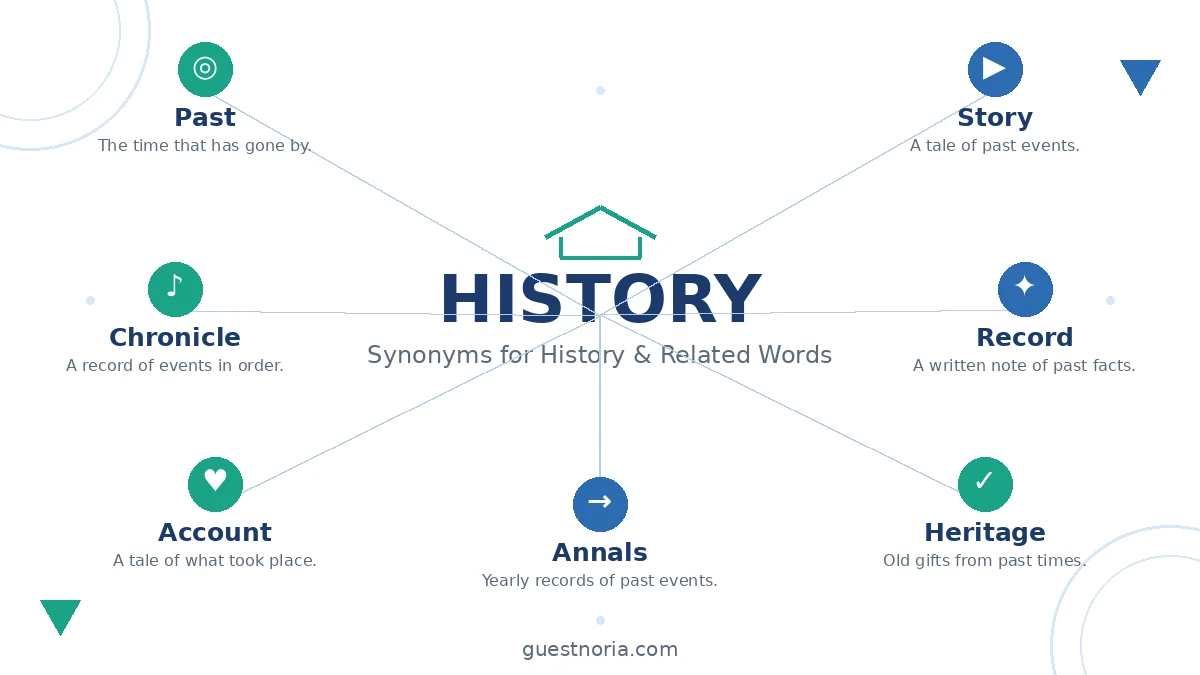
Meaning: Past means the time that has gone by.
Examples:
- Her past life in the small town shaped her kind ways.
- We learn from the past to build a bright future.
2. Story
Meaning: Story means a tale of past events.
Examples:
- The old story told of kings and brave young queens.
- Each story in the book came from a real old town.
3. Chronicle
Meaning: Chronicle means a record of events in order.
Examples:
- The chronicle lists each king from the year one thousand.
- A monk wrote the chronicle of the old stone church.
4. Record
Meaning: Record means a written note of past facts.
Examples:
- The record shows the town was built in eighteen forty.
- Each record in the file tells of a past school year.
5. Account
Meaning: Account means a tale of what took place.
Examples:
- His account of the fair made the whole class laugh.
- The old account tells how the bridge fell in the storm.
6. Annals
Meaning: Annals means yearly records of past events.
Examples:
- The annals of the church date back five hundred years.
- Old annals tell of wars and peace in the small land.
7. Heritage
Meaning: Heritage means old gifts from past times.
Examples:
- The old fort is part of our rich town heritage.
- Her heritage gave her songs from her grand old home.
8. Legacy
Meaning: Legacy means what the past leaves behind.
Examples:
- His legacy was a free school for poor village kids.
- The king left a legacy of roads and grand old halls.
9. Background
Meaning: Background means the past life of a thing.
Examples:
- Her background in music helped her teach the young choir.
- The old house had a rich background of brave town folk.
10. Tradition
Meaning: Tradition means old ways passed down in time.
Examples:
- The tradition of the spring fair is one hundred years old.
- Each family keeps the tradition of a big feast at Eid.
11. Saga
Meaning: Saga means a long tale of past heroes.
Examples:
- The saga tells of a brave sailor and his long sea trip.
- Her saga of the old clan filled the whole winter night.
12. Tale
Meaning: Tale means a short story from old times.
Examples:
- The old tale spoke of a wise queen and her gold crown.
- Each tale by the fire taught the kids a good lesson.
13. Legend
Meaning: Legend means a famous tale from the past.
Examples:
- The legend of the lost gold still draws crowds each year.
- Her legend grew as more folks heard of her brave deeds.
14. Epic
Meaning: Epic means a grand tale of great deeds.
Examples:
- The epic poem sang of wars and gods in old days.
- His epic trip across the hills took a whole long year.
15. Narrative
Meaning: Narrative means a tale told in order.
Examples:
- Her narrative of the trip kept the class glued to seats.
- The narrative in the book moves from war to peace.
16. Memoir
Meaning: Memoir means a book of one’s own past.
Examples:
- Her memoir tells of life in a small farm town.
- The old sailor wrote a memoir of his years at sea.
17. Biography
Meaning: Biography means the life story of a person.
Examples:
- The biography of the great poet won a top book prize.
- Each child read a biography of a brave old leader.
18. Lore
Meaning: Lore means old tales and facts of a place.
Examples:
- The lore of the hills speaks of fairies and gold mines.
- Old lore says the lake hides a town of long past days.
19. Folklore
Meaning: Folklore means old tales of common folk.
Examples:
- The folklore of the town tells of a kind old witch.
- Each folklore song keeps the voice of the past alive.
20. Antiquity
Meaning: Antiquity means very old times long past.
Examples:
- The coins from antiquity rest in the town museum now.
- Old pots from antiquity tell of trade in far lands.
21. Old Times
Meaning: Old Times means days from long ago.
Examples:
- In old times, folks lit lamps when the sun went down.
- Her gran spoke of old times with a soft warm smile.
22. Timeline
Meaning: Timeline means events shown in time order.
Examples:
- The timeline on the wall shows each war in order.
- Her timeline of the town starts in the year sixteen hundred.
23. Era
Meaning: Era means a long span of past time.
Examples:
- The steam era changed how folks lived and worked each day.
- A new era of peace came after the long hard war.
24. Age
Meaning: Age means a long time in past days.
Examples:
- The stone age left tools and bones in the old caves.
- Each age of the town brought new roads and new homes.
25. Period
Meaning: Period means a set span of past time.
Examples:
- The war period left deep marks on the whole small town.
- Her period of study in the old city changed her life.
26. Civilization
Meaning: Civilization means an old cultured society.
Examples:
- The old civilization built roads and grand stone towns.
- Each civilization leaves art and laws for the next age.
27. Ancestry
Meaning: Ancestry means the line of past family folk.
Examples:
- Her ancestry links her to brave sailors of old Spain.
- The old book lists the ancestry of the town’s first clan.
28. Lineage
Meaning: Lineage means a line of past kin.
Examples:
- His lineage goes back to kings of the old north land.
- The royal lineage kept the crown in one proud house.
29. Roots
Meaning: Roots means the start of a family or place.
Examples:
- Her roots lie in a small green town by the sea.
- The old tree’s roots hold the tale of past hundred years.
30. Origin
Meaning: Origin means the start point of a thing.
Examples:
- The origin of the old song lies in a far hill town.
- Each word has an origin in the speech of past folk.
Conclusion
Learning synonyms for history makes your writing clear and your speech exact. You can describe the past, an old town, or a family tale with the right word.
Try these words in emails, essays, and daily talks. Look up the full meaning of history in the Cambridge Dictionary and use it with care every day.
Keep a small notebook of new words and read it each morning. Share what you learn with friends and family, and soon these words will feel natural in your speech. Small daily practice will make your English strong and bright.