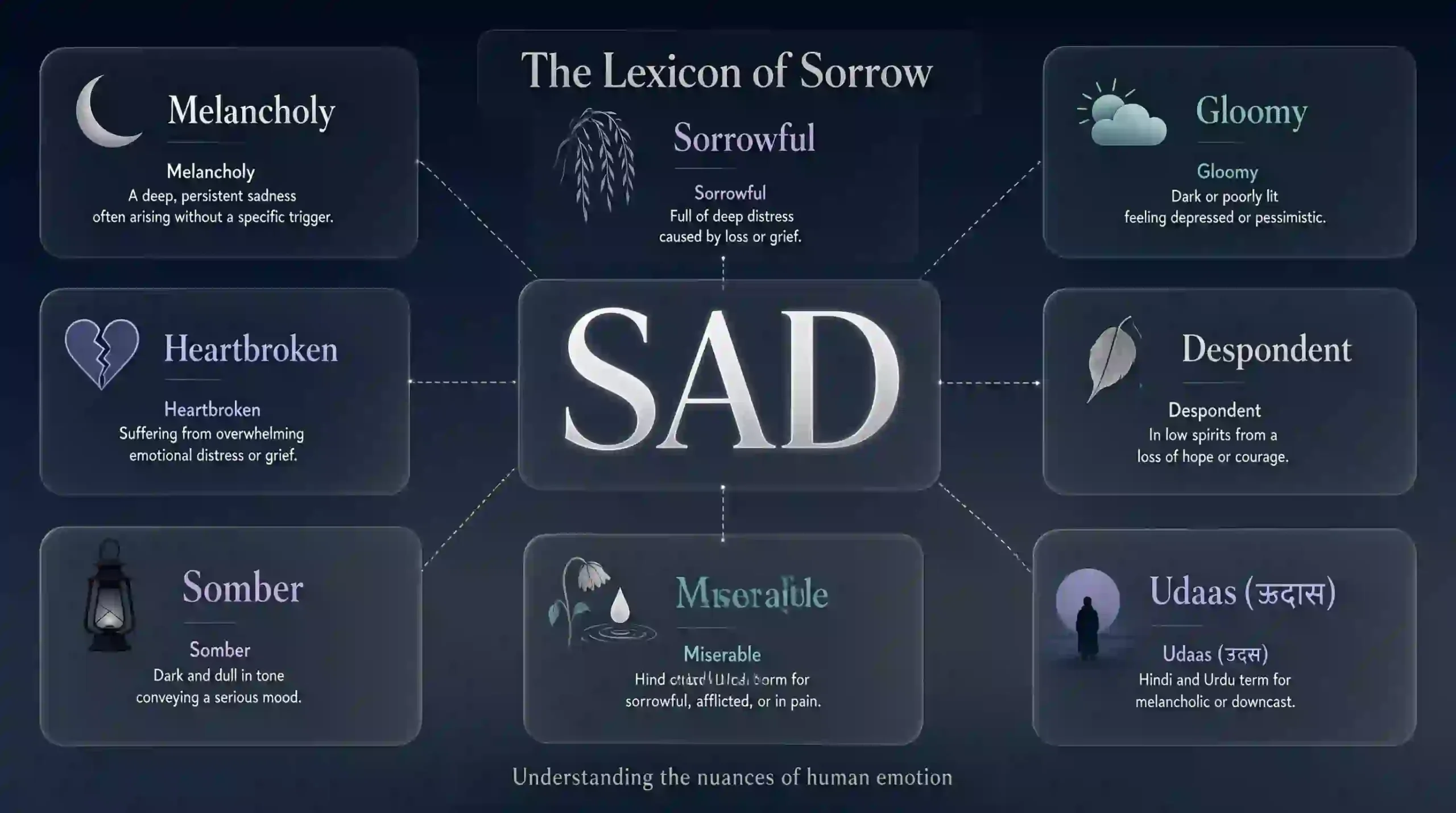
Feeling sad is a normal part of life. Sometimes, we feel low, upset, or unhappy because of hard times.
Synonyms for sad include unhappy, gloomy, sorrowful, upset, and downhearted. These words help express feelings in different ways.
Students can use these words in essays and schoolwork. Bloggers and writers can make their content more interesting.
Learning these synonyms improves your vocabulary. It also helps you share your feelings clearly in daily conversations, messages, and writing.
1. Unhappy
Meaning: Feeling bad because something did not go well.
Examples:
- She felt unhappy after losing her favorite book.
- He was unhappy with the test result.
2. Upset
Meaning: Feeling sad or worried because something has gone wrong.
Examples:
- I was upset when my friend moved away.
- She felt upset about the broken toy.
3. Miserable
Meaning: Feeling very unhappy or uncomfortable.
Examples:
- He felt miserable on the rainy day.
- I was miserable after missing the family trip.
4. Gloomy
Meaning: Feeling sad and seeing little reason to feel happy.
Examples:
- The gloomy news made everyone quiet.
- She felt gloomy on the cold morning.
5. Downhearted
Meaning: Feeling sad because you have lost hope or confidence.
Examples:
- He felt downhearted after the team lost.
- Do not feel downhearted about one small mistake.
6. Heartbroken
Meaning: Feeling very sad because of a painful loss or disappointment.
Examples:
- She was heartbroken when her best friend left town.
- He felt heartbroken after saying goodbye to his old home.
7. Melancholy
Meaning: Feeling quietly sad for a long time.
Examples:
- The old song filled her with melancholy.
- He had a melancholy look as he watched the rain.
8. Blue
Meaning: Feeling sad or low in mood.
Examples:
- I feel blue when the holidays end.
- She was a little blue after the busy weekend.
9. Dejected
Meaning: Feeling sad because something has gone wrong.
Examples:
- The player looked dejected after the final match.
- She felt dejected when her plan failed.
10. Disappointed
Meaning: Feeling sad because something was not as good as you hoped.
Examples:
- I was disappointed when the show got canceled.
- He felt disappointed with his score.
11. Sorrowful
Meaning: Feeling deep sadness because of a loss or painful event.
Examples:
- Her sorrowful voice made us listen closely.
- He looked sorrowful at the farewell party.
12. Mournful
Meaning: Showing deep sadness, often after someone has died or something has been lost.
Examples:
- The mournful music made the room feel quiet.
- She gave a mournful look at the empty chair.
13. Downcast
Meaning: Looking or feeling sad and low in spirit.
Examples:
- His downcast face showed that he was worried.
- She felt downcast after the bad news.
14. Tearful
Meaning: Feeling so sad that you may cry.
Examples:
- He became tearful during the goodbye speech.
- Her tearful eyes showed how much she cared.
15. Distressed
Meaning: Feeling very worried, upset, or sad.
Examples:
- She was distressed by the sudden change.
- The child looked distressed after getting lost in the store.
16. Woeful
Meaning: Showing or feeling great sadness.
Examples:
- He gave a woeful smile after the mistake.
- The movie told a woeful story about loss.
17. Forlorn
Meaning: Feeling lonely, sad, and without hope.
Examples:
- The little dog looked forlorn near the gate.
- She felt forlorn in the new town.
18. Despondent
Meaning: Feeling very sad and losing hope.
Examples:
- He became despondent after many failed attempts.
- She felt despondent when her plans changed.
19. Heavyhearted
Meaning: Feeling deep sadness or worry.
Examples:
- I felt heavyhearted as I left my old school.
- She was heavyhearted after the family moved away.
20. Low
Meaning: Feeling sad or not very cheerful.
Examples:
- I feel low when I have too much work.
- He was feeling low after a tough day.
21. Blue-hearted
Meaning: A rare, informal expression used to suggest a sad or gloomy mood.
Examples:
- The character felt blue-hearted after the long journey.
- She described her mood as blue-hearted in her poem.
22. Glum
Meaning: Looking or feeling quiet and unhappy.
Examples:
- He looked glum when the picnic was canceled.
- Why are you so glum today?
23. Morose
Meaning: Feeling unhappy and often not wanting to talk.
Examples:
- He became morose after the argument.
- Her morose mood lasted through the afternoon.
24. Dismal
Meaning: Very sad, gloomy, or without hope.
Examples:
- The team had a dismal day after losing twice.
- The empty room gave the house a dismal feel.
25. Woebegone
Meaning: Looking very sad or unhappy.
Examples:
- The woebegone boy sat alone after the game.
- She wore a woebegone expression at the farewell.
26. Grief-stricken
Meaning: Feeling deep sadness after the death of someone you love.
Examples:
- The grief-stricken family supported one another.
- He visited his grief-stricken friend with kind words.
27. Regretful
Meaning: Feeling sad because you wish you had done something differently.
Examples:
- She felt regretful about missing the meeting.
- He sounded regretful after speaking too harshly.
28. Lonely
Meaning: Feeling sad because you are alone or miss having company.
Examples:
- I felt lonely during my first week at college.
- She gets lonely when her family travels.
29. Pensive
Meaning: Looking thoughtful and a little sad.
Examples:
- He sat by the window with a pensive look.
- Her pensive mood made her enjoy the quiet music.
30. Wistful
Meaning: Feeling a gentle sadness when thinking about something you miss or wish for.
Examples:
- She gave a wistful smile while looking at old photos.
- He felt wistful when he remembered his childhood home.
Conclusion
Learning synonyms for sad helps you express feelings in more natural and meaningful ways. Words like unhappy, gloomy, heartbroken, and wistful can improve your writing, blogging, speaking, and communication. Practice these words in emails, essays, and daily conversations. Choose each word based on the feeling you want to describe. A stronger vocabulary helps you share your thoughts with confidence.