Have you ever heard a song that made your heart dance? A sweet sound can lift your mood in one short moment.
A loud horn may wake you up in the morning. Each sound tells a tale, and your ears catch it fast.
Sound means what you hear with your ears. It can be soft, loud, sweet, or harsh in tone.
These words help students, bloggers, writers, and daily English users. They make your speech clear and your writing bright and exact.
1. Noise
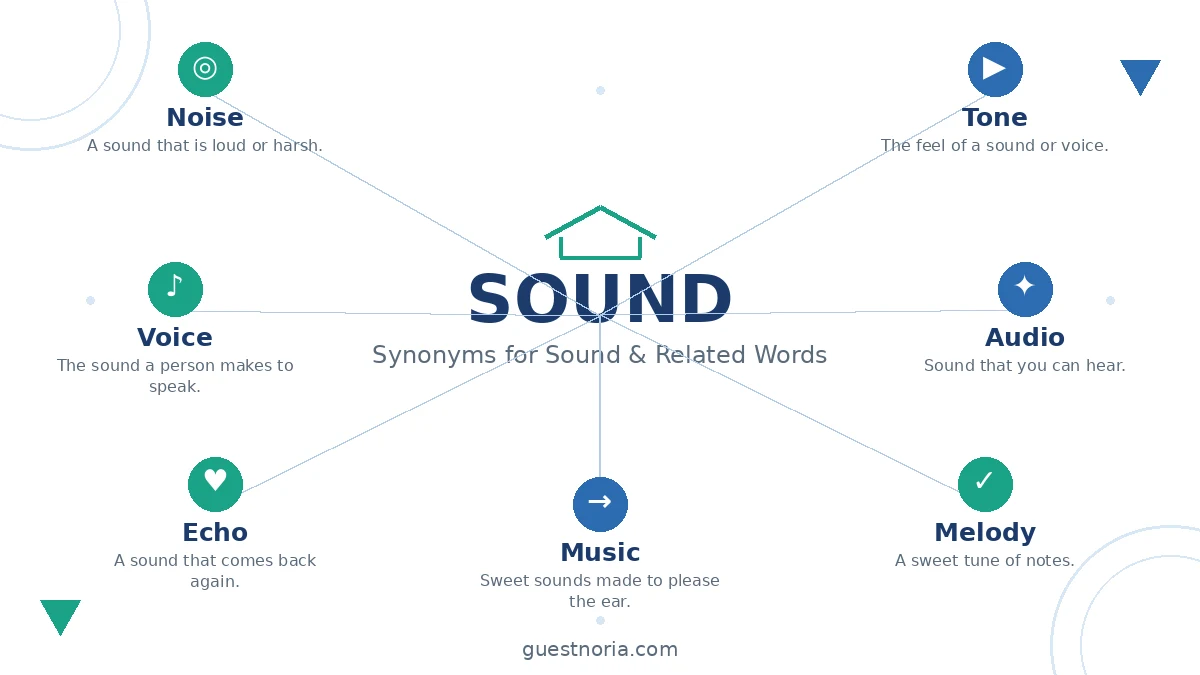
Meaning: Noise means a sound that is loud or harsh.
Examples:
- The noise of the drills filled the whole street at dawn.
- His loud noise woke the baby from a soft sweet sleep.
2. Tone
Meaning: Tone means the feel of a sound or voice.
Examples:
- Her tone was soft when she read the old sweet tale.
- The tone of his voice showed he was glad to help.
3. Voice
Meaning: Voice means the sound a person makes to speak.
Examples:
- Her voice rang clear across the whole school hall.
- The old man’s voice shook as he told his sad tale.
4. Audio
Meaning: Audio means sound that you can hear.
Examples:
- The audio from the old radio filled the small warm room.
- Her audio notes help her learn new words each day.
5. Echo
Meaning: Echo means a sound that comes back again.
Examples:
- The echo of her call bounced off the tall stone hills.
- His echo rang through the cave long after he had left.
6. Music
Meaning: Music means sweet sounds made to please the ear.
Examples:
- The music from the flute made the whole crowd dance.
- Her music class starts each day at nine in the morning.
7. Melody
Meaning: Melody means a sweet tune of notes.
Examples:
- The melody of the old song still moves her to tears.
- His melody on the piano filled the hall with soft joy.
8. Harmony
Meaning: Harmony means sweet sounds that fit well.
Examples:
- The choir sang in harmony and the crowd felt at peace.
- Her voice and the flute made a sweet fine harmony.
9. Beat
Meaning: Beat means the thump that marks time in music.
Examples:
- The beat of the drum made the kids clap and dance.
- His heart beat fast when he heard the good news.
10. Rhythm
Meaning: Rhythm means a set beat in sound or song.
Examples:
- The rhythm of the rain made her sleep like a child.
- His rhythm on the drums kept the whole band in time.
11. Roar
Meaning: Roar means a deep loud sound.
Examples:
- The roar of the lion shook the whole zoo at dawn.
- The crowd’s roar filled the ground when the goal came.
12. Whisper
Meaning: Whisper means a very soft low sound.
Examples:
- Her whisper in class made the whole row giggle and smile.
- The whisper of the wind moved the leaves on the trees.
13. Buzz
Meaning: Buzz means a low hum of bees or wires.
Examples:
- The buzz of bees filled the warm green summer field.
- His phone gave a soft buzz when the text came in.
14. Hum
Meaning: Hum means a soft low steady sound.
Examples:
- The hum of the old fan filled the hot still room.
- She gave a soft hum as she cooked the noon meal.
15. Ring
Meaning: Ring means a clear sound like a bell.
Examples:
- The ring of the school bell sent kids out to play.
- Her phone gave a loud ring in the quiet still hall.
16. Bang
Meaning: Bang means a short loud burst of sound.
Examples:
- The bang of the door made the whole house jump up.
- His loud bang on the gate woke the old watchman fast.
17. Crash
Meaning: Crash means a loud sound of things that fall.
Examples:
- The crash of the pots woke the whole house at dawn.
- His crash on the bike left him with a sore sore knee.
18. Chime
Meaning: Chime means a sweet ring of bells.
Examples:
- The chime of the clock rang soft at the noon hour.
- Her chime bracelet made a sweet ring as she danced.
19. Song
Meaning: Song means music with words to sing.
Examples:
- Her song at the fair won the hearts of the crowd.
- The old song still plays on the radio each warm night.
20. Tune
Meaning: Tune means a set of notes that please the ear.
Examples:
- His tune on the flute made the old folks smile wide.
- She hummed a tune as she swept the small front yard.
21. Pitch
Meaning: Pitch means how high or low a sound is.
Examples:
- Her pitch was high when she sang the sweet love song.
- The pitch of his voice rose when he told the joke.
22. Volume
Meaning: Volume means how loud a sound is.
Examples:
- Turn the volume down so the baby can sleep in peace.
- His volume rose as he spoke to the big loud crowd.
23. Resonance
Meaning: Resonance means a deep rich sound that lasts.
Examples:
- The resonance of the bell filled the old stone church.
- His voice had a warm resonance that moved the crowd.
24. Vibration
Meaning: Vibration means a fast shake that makes sound.
Examples:
- The vibration of the drum made the floor shake with joy.
- Her phone gave a soft vibration when the call came in.
25. Clang
Meaning: Clang means a loud ring of metal.
Examples:
- The clang of the pots rang out from the old kitchen.
- His clang on the bell woke the whole small sleepy town.
26. Thud
Meaning: Thud means a dull low sound of a fall.
Examples:
- The thud of the book woke the cat from its sleep.
- His thud on the floor made the whole house shake a bit.
27. Murmur
Meaning: Murmur means a soft low unclear sound.
Examples:
- The murmur of the crowd grew as the show went on.
- Her murmur of thanks made the old nurse smile with joy.
28. Hush
Meaning: Hush means a soft quiet sound or calm.
Examples:
- A hush fell on the hall when the star came on stage.
- The hush of the night made the whole town feel at peace.
29. Blast
Meaning: Blast means a loud burst of sound or air.
Examples:
- The blast of the horn made the whole street jump up.
- His blast on the whistle sent the kids back to class.
30. Cry
Meaning: Cry means a loud call or shout.
Examples:
- The cry of the baby woke the whole house at dawn.
- Her cry of joy rang out when she won the top prize.
Conclusion
Learning synonyms for sound makes your writing clear and your speech exact. You can describe a sweet song, a loud horn, or a soft whisper with the right word.
Try these words in emails, essays, and daily talks. Look up the full meaning of sound in the Cambridge Dictionary and use it with care every day.
Keep a small notebook of new words and read it each morning. Share what you learn with friends and family, and soon these words will feel natural in your speech. Small daily practice will make your English strong and bright.