The word date has several meanings, including a calendar day, a romantic meeting, or a sweet fruit. Learning synonyms for dates helps you understand these meanings and choose the right words for different situations in everyday English.
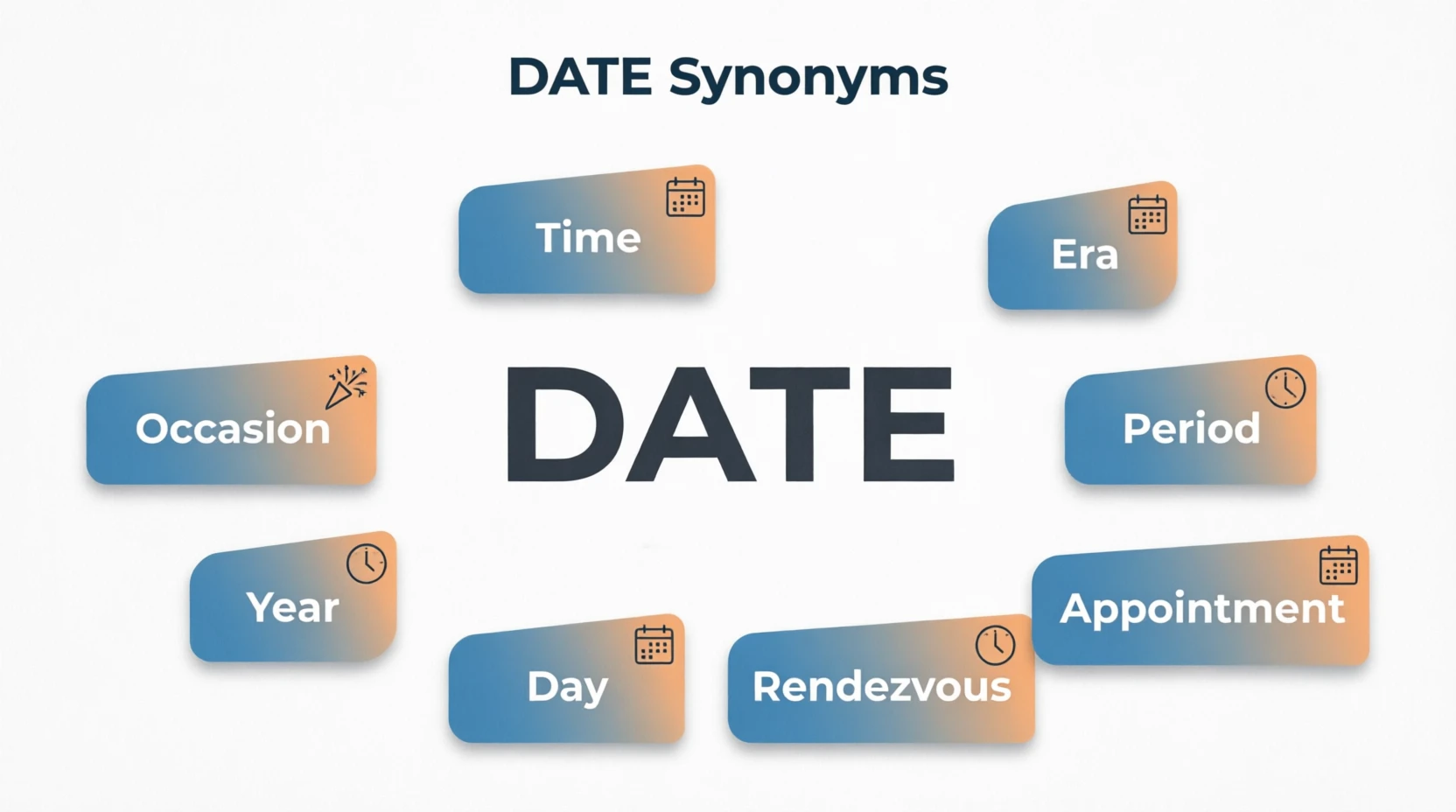
Common synonyms for date include day, occasion, appointment, meeting, and rendezvous. Each word has a different use, depending on the context and intended meaning.
For calendar dates, words like day and time may fit well. For romantic situations, meeting or rendezvous can describe spending time together.
Whether you are a student, writer, blogger, or English learner, exploring synonyms for date can expand your vocabulary and make your writing clearer, more natural, and more effective.
1. Day
Meaning: A day is a period of time from morning to night.
Examples:
- My birthday falls on a special day.
- We had a fun day at the beach.
2. Time
Meaning: Time tells us when something happens or how long it lasts.
Examples:
- What time is your school meeting?
- We need to choose a time for dinner.
3. Occasion
Meaning: An occasion is a special event or time.
Examples:
- Her wedding was a happy occasion.
- We bought flowers for the special occasion.
4. Appointment
Meaning: An appointment is a planned time to meet someone.
Examples:
- I have a doctor’s appointment tomorrow.
- She made an appointment with her teacher.
5. Meeting
Meaning: A meeting is a time when people come together to talk.
Examples:
- Our team has a meeting on Friday.
- I will attend a meeting with my classmates.
6. Engagement
Meaning: An engagement is a planned event or meeting that someone agrees to attend.
Examples:
- He has a work engagement this afternoon.
- She cannot come because of another engagement.
7. Schedule
Meaning: A schedule is a plan that shows when things will happen.
Examples:
- My school schedule is busy this week.
- We checked the schedule before leaving home.
8. Deadline
Meaning: A deadline is the last day or time to finish something.
Examples:
- The deadline for my essay is Monday.
- Please finish the project before the deadline.
9. Calendar Day
Meaning: A calendar day is a day shown on a calendar.
Examples:
- We chose a calendar day for our school trip.
- The event falls on a busy calendar day.
10. Appointment Date
Meaning: An appointment date is the day when a planned meeting will take place.
Examples:
- My appointment date is next Wednesday.
- Please confirm your appointment date by email.
11. Meeting Date
Meaning: A meeting date is the day when people plan to meet.
Examples:
- The manager changed the meeting date.
- We agreed on a meeting date yesterday.
12. Timestamp
Meaning: A timestamp is a mark that shows when something happened.
Examples:
- The photo has a timestamp from last night.
- Check the timestamp to see when the message arrived.
13. Day of the Month
Meaning: The day of the month is the number that tells which day it is.
Examples:
- What is the day of the month today?
- Write the day of the month on the form.
14. Calendar Entry
Meaning: A calendar entry is a note about an event or plan on a calendar.
Examples:
- I added the school trip as a calendar entry.
- Her calendar entry reminds her about the meeting.
15. Time Slot
Meaning: A time slot is a set period saved for an activity.
Examples:
- I booked a time slot for my dentist visit.
- Choose a time slot that works for everyone.
16. Plan
Meaning: A plan is an idea about what someone will do and when.
Examples:
- Our plan is to meet after school.
- We made a plan for Saturday evening.
17. Visit
Meaning: A visit is a time when you go to see someone or somewhere.
Examples:
- We planned a visit to the museum.
- Her visit to our home made us happy.
18. Outing
Meaning: An outing is a short trip for fun or a special activity.
Examples:
- Our family outing is planned for Sunday.
- They enjoyed an outing to the beach.
19. Get-Together
Meaning: A get-together is a casual meeting with friends or family.
Examples:
- We planned a get-together for the weekend.
- The family get-together will be at my aunt’s house.
20. Rendezvous
Meaning: A rendezvous is a planned meeting at a certain time and place.
Examples:
- We arranged a rendezvous near the library.
- Their rendezvous was set for noon.
21. Appointment Time
Meaning: Appointment time is the time when a planned meeting begins.
Examples:
- My appointment time is 10 a.m.
- Please arrive five minutes before your appointment time.
22. Due Date
Meaning: A due date is the day when something must be paid, returned, or finished.
Examples:
- My library book has a due date of Friday.
- I wrote the bill’s due date in my notebook.
23. Target Date
Meaning: A target date is the day someone hopes to finish a task or reach a goal.
Examples:
- Our target date for the launch is June 10.
- The team picked a target date for the new project.
24. Launch Date
Meaning: A launch date is the day a new product or project becomes available.
Examples:
- The company announced its launch date.
- We are waiting for the game’s launch date.
25. Release Date
Meaning: A release date is the day a film, book, or product becomes available.
Examples:
- The movie’s release date is next month.
- Fans are excited about the book’s release date.
26. Start Date
Meaning: A start date is the day something begins.
Examples:
- My new course has a start date of Monday.
- The form asks for your job start date.
27. End Date
Meaning: An end date is the day something finishes.
Examples:
- The summer camp has an end date in August.
- Please enter the end date of your course.
28. Birth Date
Meaning: A birth date is the day a person was born.
Examples:
- The form asks for my birth date.
- She wrote her birth date on the school record.
29. Anniversary
Meaning: An anniversary is the yearly return of the date of a special event.
Examples:
- We celebrate our wedding anniversary in May.
- The company marked its tenth anniversary this year.
30. Calendar Date
Meaning: A calendar date is a specific day, month, and year.
Examples:
- Please write the calendar date at the top of the letter.
- The calendar date for the event is October 20, 2026.
Conclusion
Learning synonyms for dates can improve your writing, blogging, speaking, and everyday communication. Words like day, appointment, deadline, and occasion help you explain different situations clearly. Students can use them in essays, while bloggers and content writers can make their articles more useful. Practice these words in emails, schoolwork, and daily conversations. Always choose the word that fits your meaning to keep your English clear and natural.