
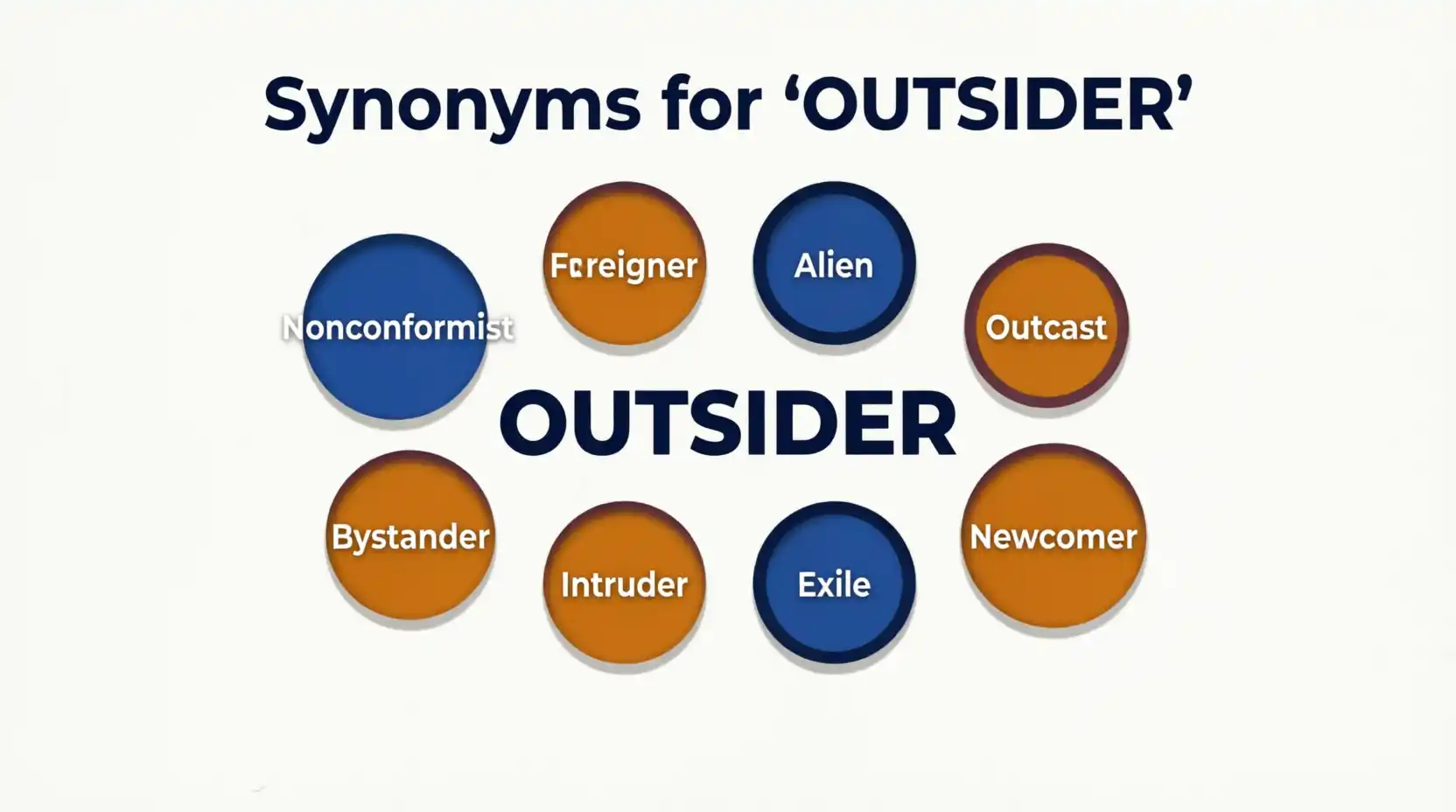
Virtual means something that exists or happens through computers, the internet, or digital technology instead of being physically present.
Common synonyms for virtual include digital, online, electronic, simulated, remote, and computer-generated, depending on the context.
These alternatives can help students, writers, bloggers, and English learners make their sentences clearer and more natural.
This guide explores useful synonyms for virtual with simple meanings and examples for everyday writing.
Stranger
Meaning: A stranger is someone you do not know.
Examples:
- A stranger asked me for directions.
- I saw a stranger near the shop.
Newcomer
Meaning: A newcomer is someone who has recently joined a place or group.
Examples:
- A newcomer joined our class today.
- Everyone welcomed the newcomer warmly.
Foreigner
Meaning: A foreigner is a person from another country.
Examples:
- The city attracts many foreigners.
- A foreigner asked about the local food.
Alien
Meaning: An alien is someone who comes from another place and is not part of a group.
Examples:
- He felt like an alien at the event.
- The new student felt like an alien in the unfamiliar group.
Nonmember
Meaning: A nonmember is someone who does not belong to a group.
Examples:
- Nonmembers cannot enter this section.
- The club offers a special event for nonmembers.
Visitor
Meaning: A visitor is someone who comes to a place for a short time.
Examples:
- A visitor arrived at our office.
- The museum was full of visitors.
Guest
Meaning: A guest is someone invited to a place or event.
Examples:
- Our guest arrived before dinner.
- The guest sat near the window.
Stranger to the Group
Meaning: A stranger to the group is someone who is not familiar with its members.
Examples:
- I was a stranger to the group at first.
- She felt like a stranger to the group.
Unfamiliar Person
Meaning: An unfamiliar person is someone you do not know well.
Examples:
- An unfamiliar person called my name.
- He spoke with an unfamiliar person.
New Face
Meaning: A new face is a person who has recently appeared in a group or place.
Examples:
- There was a new face in our meeting.
- The teacher noticed a new face in class.
Newcomer to the Community
Meaning: A newcomer to the community is someone who has recently joined a local group.
Examples:
- The newcomer to the community met her neighbors.
- We welcomed the newcomer to the community.
Nonparticipant
Meaning: A nonparticipant is someone who does not take part in an activity.
Examples:
- The nonparticipant watched the game quietly.
- Each nonparticipant stayed outside the activity area.
Bystander
Meaning: A bystander is someone who is present but not involved.
Examples:
- A bystander saw the accident.
- The bystander called for help.
Onlooker
Meaning: An onlooker is someone who watches an event without joining it.
Examples:
- An onlooker watched the street show.
- Several onlookers stood near the stage.
Observer
Meaning: An observer is someone who watches something carefully.
Examples:
- The observer took notes during the meeting.
- She worked as an observer during the event.
Spectator
Meaning: A spectator is someone who watches a game, show, or event.
Examples:
- Every spectator cheered for the players.
- The spectators enjoyed the football match.
Passerby
Meaning: A passerby is someone who happens to walk past a place.
Examples:
- A passerby noticed the lost dog.
- A passerby stopped to help.
Nonresident
Meaning: A nonresident is someone who does not live in a certain place.
Examples:
- Nonresidents must pay a small fee.
- The park is open to residents and nonresidents.
Nonlocal
Meaning: Nonlocal describes someone or something from another area.
Examples:
- Many nonlocal visitors came to the festival.
- The shop welcomes nonlocal customers.
New Arrival
Meaning: A new arrival is someone who has recently come to a place.
Examples:
- The new arrival found a seat near us.
- Everyone greeted the new arrival.
Outsider
Meaning: An outsider is someone who is not part of a group.
Examples:
- He sometimes felt like an outsider at school.
- She was an outsider in the new team.
Excluded Person
Meaning: An excluded person is someone who has been left out of a group or activity.
Examples:
- The excluded person felt unhappy.
- We invited the excluded person to join us.
Individual Outside the Group
Meaning: This describes a person who is not included in a certain group.
Examples:
- An individual outside the group watched the discussion.
- The individual outside the group stayed quiet.
Unaffiliated Person
Meaning: An unaffiliated person is someone who is not connected to a group or organization.
Examples:
- An unaffiliated person attended the public event.
- The program is open to unaffiliated people.
Independent Person
Meaning: An independent person is someone who does not belong to or depend on a particular group.
Examples:
- He works as an independent person.
- She prefers to remain an independent person.
Lone Individual
Meaning: A lone individual is one person who is alone or separate from others.
Examples:
- A lone individual waited near the gate.
- The lone individual walked across the field.
Separate Person
Meaning: A separate person is someone who is apart from a group.
Examples:
- He stayed as a separate person during the discussion.
- She worked as a separate person from the main team.
Social Stranger
Meaning: A social stranger is someone who is not known within a social group.
Examples:
- I was a social stranger at the party.
- The social stranger soon met new people.
Unknown Person
Meaning: An unknown person is someone whose identity is not known.
Examples:
- An unknown person left a note.
- The message came from an unknown person.
Noninsider
Meaning: A noninsider is someone who is not part of an inner group.
Examples:
- A noninsider may not know the group’s plans.
- The report was shared with every noninsider.
Conclusion
Learning synonyms for outsiders gives you more ways to describe people and social situations. These words can make your writing clearer and more interesting. Students can use them in essays, while bloggers and content writers can avoid repeating the same word. Daily English users can practice them in emails and conversations. Try using a few new words each week. Regular practice can improve your writing, speaking, and communication skills.