Rights are freedoms or benefits that people are allowed to have. They help us live with fairness, respect, and safety. Knowing their meaning helps us understand our duties and freedoms.
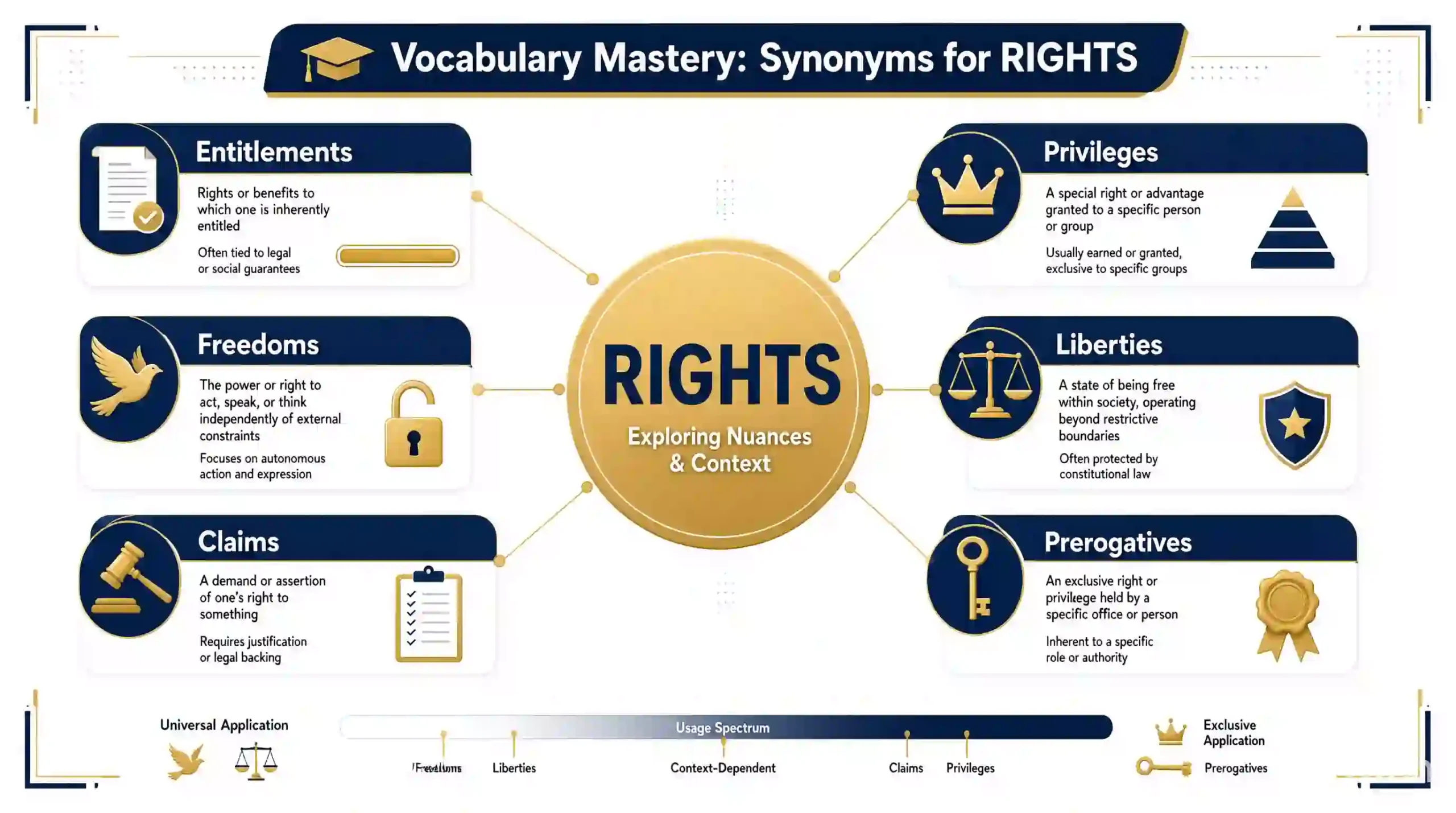
There are many synonyms for rights, such as freedoms, privileges, entitlements, permissions, and claims. Each word has a slightly different meaning.
Students can use these words in essays and schoolwork. Bloggers and writers can use them to make their content clear and engaging.
Learning these synonyms can also improve daily conversations. They help you express ideas better, choose the right words, and build stronger English vocabulary.
1. Freedoms
Meaning: Freedoms are the things people are allowed to do without unfair limits.
Examples:
- Everyone should enjoy basic freedoms.
- Freedom of speech lets people share their views.
2. Liberties
Meaning: Liberties are the freedoms people have to make their own choices.
Examples:
- The law protects our civil liberties.
- People value their liberty to speak openly.
3. Privileges
Meaning: Privileges are special benefits or permissions given to a person or group.
Examples:
- Members have the privilege of using the club library.
- Driving is a privilege that comes with rules.
4. Entitlements
Meaning: Entitlements are benefits or things that a person has a right to receive.
Examples:
- Workers may have an entitlement to paid leave.
- She asked about her benefits and entitlements.
5. Claims
Meaning: Claims are requests or statements that someone has a right to something.
Examples:
- He made a claim to the family land.
- The worker filed a claim for unpaid wages.
6. Permissions
Meaning: Permissions are approvals that allow someone to do something.
Examples:
- You need permission to enter this room.
- The teacher gave us permission to leave early.
7. Authorizations
Meaning: Authorizations are official approvals that allow an action to happen.
Examples:
- The manager gave authorization for the purchase.
- You need written authorization to access the files.
8. Legal Protections
Meaning: Legal protections are rules that help keep people safe from unfair treatment.
Examples:
- Workers need legal protections at their jobs.
- The law provides legal protection for children.
9. Guarantees
Meaning: Guarantees are promises that something will be provided or protected.
Examples:
- The law gives a guarantee of equal treatment.
- The school offers a guarantee of safe learning spaces.
10. Powers
Meaning: Powers are abilities or legal permissions to act or make decisions.
Examples:
- The judge has the power to make a ruling.
- The board has the power to approve the plan.
11. Authorities
Meaning: Authorities are official powers or rights to make decisions and give orders.
Examples:
- The local authority can approve the new road.
- She has the authority to sign the form.
12. Immunities
Meaning: Immunities are special protections from certain laws, duties, or legal actions.
Examples:
- Some officials have legal immunity for certain acts.
- The agreement explains the group’s immunities.
13. Claims of Ownership
Meaning: Claims of ownership are statements that someone owns or has a legal interest in something.
Examples:
- They made a claim of ownership over the old house.
- The family showed papers to support its ownership claim.
14. Legal Claims
Meaning: Legal claims are requests for something based on the law.
Examples:
- She took her legal claim to court.
- The lawyer reviewed his legal claim.
15. Civil Liberties
Meaning: Civil liberties are basic freedoms protected by law.
Examples:
- Free speech is an important civil liberty.
- The group works to protect civil liberties.
16. Human Rights
Meaning: Human rights are basic freedoms and protections that belong to every person.
Examples:
- Every person should enjoy human rights.
- The lesson taught us why human rights matter.
17. Constitutional Rights
Meaning: Constitutional rights are freedoms and protections given by a country’s constitution.
Examples:
- The case focused on constitutional rights.
- Citizens should learn about their constitutional rights.
18. Legal Privileges
Meaning: Legal privileges are special protections or benefits recognized by law.
Examples:
- The lawyer explained the legal privilege in the case.
- Certain legal privileges protect private talks with a lawyer.
19. Options
Meaning: Options are choices that a person can select.
Examples:
- Students have several options for their final project.
- You can choose the payment option that suits you.
20. Choices
Meaning: Choices are decisions people are free to make.
Examples:
- Everyone should have a choice in the matter.
- She made her own choice about the course.
21. Allowances
Meaning: Allowances are amounts or actions that are permitted under certain rules.
Examples:
- The rules include an allowance for short breaks.
- The policy gives an allowance for extra study time.
22. Benefits
Meaning: Benefits are helpful things or advantages that someone receives.
Examples:
- Health benefits can support workers and their families.
- The plan offers many benefits to its members.
23. Protections
Meaning: Protections are rules or actions that keep people safe from harm or unfair treatment.
Examples:
- The new policy gives better protection to workers.
- Children need protection from unfair treatment.
24. Safeguards
Meaning: Safeguards are steps or rules that prevent harm or misuse.
Examples:
- The system has safeguards for personal data.
- These safeguards help protect public records.
25. Due Process
Meaning: Due process is the fair legal treatment a person must receive.
Examples:
- Everyone deserves due process under the law.
- The court checked whether due process was followed.
26. Recourse
Meaning: Recourse is a way to seek help or take action when something goes wrong.
Examples:
- Customers have recourse if a product is faulty.
- She sought legal recourse after the dispute.
27. Redress
Meaning: Redress is a way to correct a wrong or make up for unfair treatment.
Examples:
- The workers asked for redress after the unfair decision.
- The court offered a way to seek redress.
28. Prerogatives
Meaning: Prerogatives are special rights or powers given to a person or office.
Examples:
- The chairperson has certain prerogatives.
- The agreement lists the manager’s prerogatives.
29. Warrants
Meaning: Warrants are official documents or legal permissions that allow a specific action.
Examples:
- The police showed a search warrant.
- The court issued a warrant for the required action.
30. Titles
Meaning: Titles are legal claims or documents that show ownership of property.
Examples:
- The buyer checked the title before purchasing the house.
- The family kept the land title in a safe place.
Conclusion
Learning synonyms for rights helps you choose words that fit different situations. Words like freedoms, liberties, and protections can make your writing clearer and more interesting. These words are useful for essays, blogs, emails, and daily conversations. Practice using them in your own sentences. Over time, you will build stronger writing skills and express your ideas with confidence.