Looking for synonyms for complacent? This word describes someone who feels too satisfied with their situation and stops trying to improve or change.
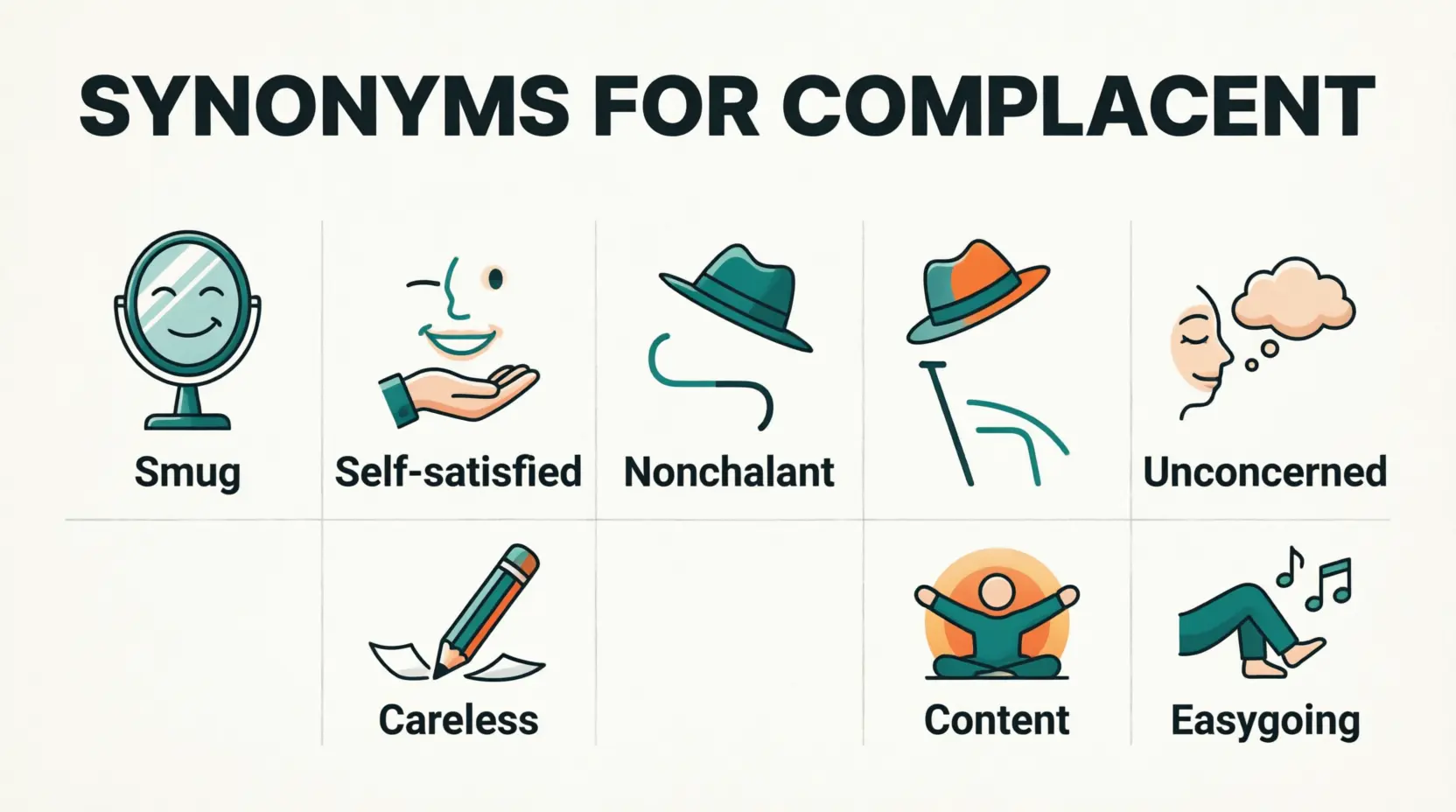
Useful alternatives include self-satisfied, smug, content, unconcerned, and uncritical. Each word carries a slightly different meaning and tone.
Learning these synonyms can improve your vocabulary and make your English more natural, clear, and expressive.
In this guide, you will discover simple meanings and examples to understand each synonym easily and use it correctly in everyday writing.
1. Self-satisfied
Meaning: Feeling pleased with yourself and not seeing a need to improve.
Examples:
- He became self-satisfied after winning the prize.
- She felt self-satisfied with her first result.
2. Satisfied
Meaning: Feeling happy because you think something is good enough.
Examples:
- He was satisfied with his work.
- The team seemed satisfied after the meeting.
3. Content
Meaning: Feeling happy with what you have and not wanting more.
Examples:
- She was content with her simple life.
- He felt content after finishing the project.
4. Unconcerned
Meaning: Not worried about something that may need attention.
Examples:
- He seemed unconcerned about the delay.
- She was unconcerned about the small mistake.
5. Careless
Meaning: Not giving enough attention to something important.
Examples:
- His careless work caused a problem.
- She became careless after the task got easier.
6. Overconfident
Meaning: Being more confident than you should be.
Examples:
- He became overconfident before the match.
- Her overconfident attitude caused mistakes.
7. Passive
Meaning: Not taking action when action may be needed.
Examples:
- He stayed passive during the discussion.
- The team was passive when problems appeared.
8. Unambitious
Meaning: Not wanting to achieve more or reach bigger goals.
Examples:
- He seemed unambitious after leaving school.
- Her unambitious attitude surprised her friends.
9. Apathetic
Meaning: Not caring much about something.
Examples:
- The students seemed apathetic during the meeting.
- He became apathetic about his old hobby.
10. Indifferent
Meaning: Not showing much care or interest.
Examples:
- She was indifferent to the result.
- He seemed indifferent about the changes.
11. Composed
Meaning: Calm and not easily worried or excited.
Examples:
- She remained composed during the interview.
- He looked composed before the presentation.
12. Relaxed
Meaning: Calm and free from stress or worry.
Examples:
- He felt relaxed after the exam.
- She looked relaxed during the weekend.
13. Untroubled
Meaning: Not worried or upset by a problem.
Examples:
- He appeared untroubled by the news.
- She remained untroubled during the busy day.
14. Secure
Meaning: Feeling safe and confident about your position.
Examples:
- He felt secure in his new job.
- She was secure in her decision.
15. Assured
Meaning: Feeling confident that everything is fine.
Examples:
- He sounded assured during the talk.
- She felt assured after hearing the answer.
16. Unworried
Meaning: Not feeling worried about something.
Examples:
- He looked unworried before the test.
- She stayed unworried despite the delay.
17. Easygoing
Meaning: Calm and not easily upset by problems.
Examples:
- My brother is very easygoing.
- Her easygoing nature makes teamwork simple.
18. Laid-back
Meaning: Relaxed and not easily stressed.
Examples:
- He has a laid-back approach to work.
- She stayed laid-back during the trip.
19. Unconcerned
Meaning: Showing little worry about a situation.
Examples:
- The manager seemed unconcerned about the complaint.
- He was unconcerned when the plan changed.
20. Carefree
Meaning: Feeling free from worry or serious concerns.
Examples:
- The children enjoyed a carefree afternoon.
- He remembered his carefree school days.
21. Smug
Meaning: Too pleased with yourself because you think you are better or right.
Examples:
- His smug smile annoyed his teammates.
- She sounded smug after solving the puzzle.
22. Presumptuous
Meaning: Acting too confident about what you can do or expect.
Examples:
- His presumptuous comment surprised everyone.
- It was presumptuous to assume they would agree.
23. Neglectful
Meaning: Failing to give proper care or attention.
Examples:
- His neglectful habits caused problems.
- The neglectful worker missed several important tasks.
24. Sluggish
Meaning: Slow to act, move, or respond.
Examples:
- The team had a sluggish start.
- He felt sluggish after a long day.
25. Lethargic
Meaning: Having little energy or interest in doing things.
Examples:
- She felt lethargic after the tiring journey.
- The group seemed lethargic during the afternoon.
26. Unmotivated
Meaning: Not feeling ready or willing to work toward a goal.
Examples:
- He felt unmotivated after the setback.
- She became unmotivated during the long project.
27. Inactive
Meaning: Not taking part or doing very much.
Examples:
- The group became inactive during the summer.
- He was inactive for several weeks.
28. Dormant
Meaning: Not active or growing for a period of time.
Examples:
- The project remained dormant for months.
- Her old hobby became dormant after college.
29. Nonchalant
Meaning: Calm and showing little worry about something.
Examples:
- He gave a nonchalant reply.
- She looked nonchalant during the discussion.
30. Unmotivated
Meaning: Not having a strong reason or desire to take action.
Examples:
- He felt unmotivated to start the assignment.
- The workers seemed unmotivated after the change.
Conclusion
Learning synonyms for complacent can make your writing more clear and interesting. These words help students write stronger essays, bloggers avoid repeated language, and content writers create better articles. They can also improve everyday speaking and communication. Practice these words in emails, essays, messages, and daily conversations. With regular practice, you will learn when each word fits best and build a stronger English vocabulary.