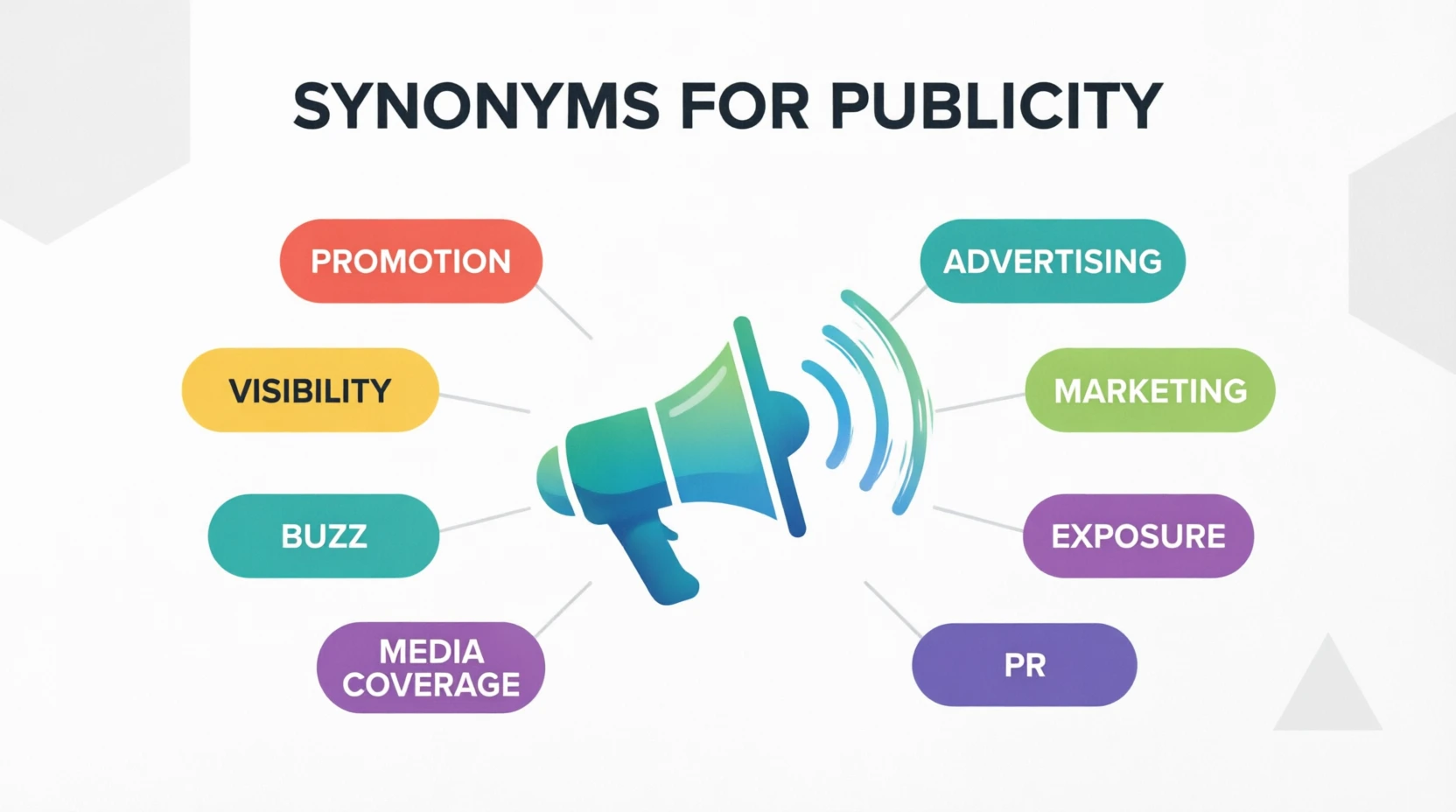
Synonyms for publicity help you describe public attention, promotion, or awareness using different words.
Publicity means attracting attention toward a person, product, service, event, or important idea.
Common synonyms include promotion, exposure, advertising, coverage, attention, awareness, and marketing in different contexts.
Learning these synonyms improves vocabulary and helps writers choose clear, suitable words for different situations.
Promotion
Meaning: Promotion means activities used to make people interested in something.
Examples:
- The store started a new promotion.
- Good promotion helped the event get noticed.
Advertising
Meaning: Advertising means telling people about a product, service, or event.
Examples:
- The company is advertising its new phone.
- Online advertising brought more customers.
Publicity
Meaning: Publicity means public attention given to a person, product, event, or idea.
Examples:
- The new book received plenty of publicity.
- The concert gained publicity after the announcement.
Exposure
Meaning: Exposure means getting attention from many people.
Examples:
- The young artist gained exposure online.
- The post gave the brand more exposure.
Attention
Meaning: Attention means interest or notice from people.
Examples:
- The campaign attracted public attention.
- Her artwork received a lot of attention.
Awareness
Meaning: Awareness means knowing about something or understanding it.
Examples:
- The campaign raised awareness about recycling.
- The school created awareness about road safety.
Announcement
Meaning: An announcement is information shared publicly with people.
Examples:
- The company made an important announcement.
- The event announcement appeared on social media.
Notice
Meaning: Notice means public knowledge or attention given to something.
Examples:
- The project soon came to public notice.
- Her work received notice from local readers.
Marketing
Meaning: Marketing means promoting something to attract people who may want it.
Examples:
- The business uses social media marketing.
- Good marketing helped the product grow.
Outreach
Meaning: Outreach means reaching people to share information or build interest.
Examples:
- The group began community outreach.
- Online outreach helped spread the message.
Campaigning
Meaning: Campaigning means actively promoting a person, idea, product, or cause.
Examples:
- The team is campaigning for the new project.
- They spent weeks campaigning online.
Press
Meaning: The press means newspapers, magazines, websites, and other news media.
Examples:
- The story appeared in the press.
- The press covered the opening ceremony.
Media Coverage
Meaning: Media coverage means attention given to something by news organizations.
Examples:
- The festival received media coverage.
- The launch gained national media coverage.
News Coverage
Meaning: News coverage means reports about an event or topic in the news.
Examples:
- The accident received news coverage.
- The new museum received positive news coverage.
Promotion Campaign
Meaning: A promotion campaign is a planned effort to make something more popular.
Examples:
- The brand launched a promotion campaign.
- Our team created a promotion campaign for the sale.
Marketing Push
Meaning: A marketing push is a strong effort to attract attention to something.
Examples:
- The company made a marketing push before summer.
- The marketing push increased website visits.
Buzz
Meaning: Buzz means excited talk and interest around something.
Examples:
- The movie created a lot of buzz.
- The new app is getting online buzz.
Hype
Meaning: Hype means a lot of excitement and attention around something.
Examples:
- The game received huge hype before release.
- Social media created hype around the product.
Fanfare
Meaning: Fanfare means a lot of public excitement and attention.
Examples:
- The store opened with great fanfare.
- The award was announced with fanfare.
Spotlight
Meaning: The spotlight means strong public attention on someone or something.
Examples:
- The young singer stepped into the spotlight.
- The new project is now in the spotlight.
Recognition
Meaning: Recognition means people notice and appreciate someone or something.
Examples:
- The writer gained recognition for her work.
- The award brought recognition to the team.
Fame
Meaning: Fame means being widely known by many people.
Examples:
- The actor found fame at a young age.
- The invention brought him worldwide fame.
Popularity
Meaning: Popularity means being liked or known by many people.
Examples:
- The brand gained popularity quickly.
- Her videos increased the show’s popularity.
Reputation
Meaning: Reputation means what people think or know about someone or something.
Examples:
- The restaurant has a strong reputation.
- Good service improved the company’s reputation.
Endorsement
Meaning: Endorsement means public support for a person, product, or idea.
Examples:
- The athlete gave the product an endorsement.
- Her endorsement helped the campaign gain attention.
Advocacy
Meaning: Advocacy means publicly supporting a cause or idea.
Examples:
- She works in support of environmental advocacy.
- The group uses advocacy to spread its message.
Information
Meaning: Information means facts or details shared with people.
Examples:
- The website provides useful information.
- We shared information about the new event.
Communication
Meaning: Communication means sharing ideas or information with others.
Examples:
- Clear communication helped promote the event.
- Good communication keeps customers informed.
Viral Attention
Meaning: Viral attention means very fast public interest, often online.
Examples:
- The funny video received viral attention.
- Her post gained viral attention overnight.
Public Interest
Meaning: Public interest means the level of interest people have in a topic or event.
Examples:
- The story attracted strong public interest.
- The new exhibit created public interest.
Conclusion
Learning synonyms for publicity can improve your writing, blogging, speaking, and everyday communication. These words help you describe attention, promotion, media activity, and public interest more clearly. Students can use them in essays, while bloggers and content writers can avoid repeating the same word. Try practicing these terms in emails, school work, articles, and daily conversations. With regular practice, your vocabulary will become stronger and more natural.