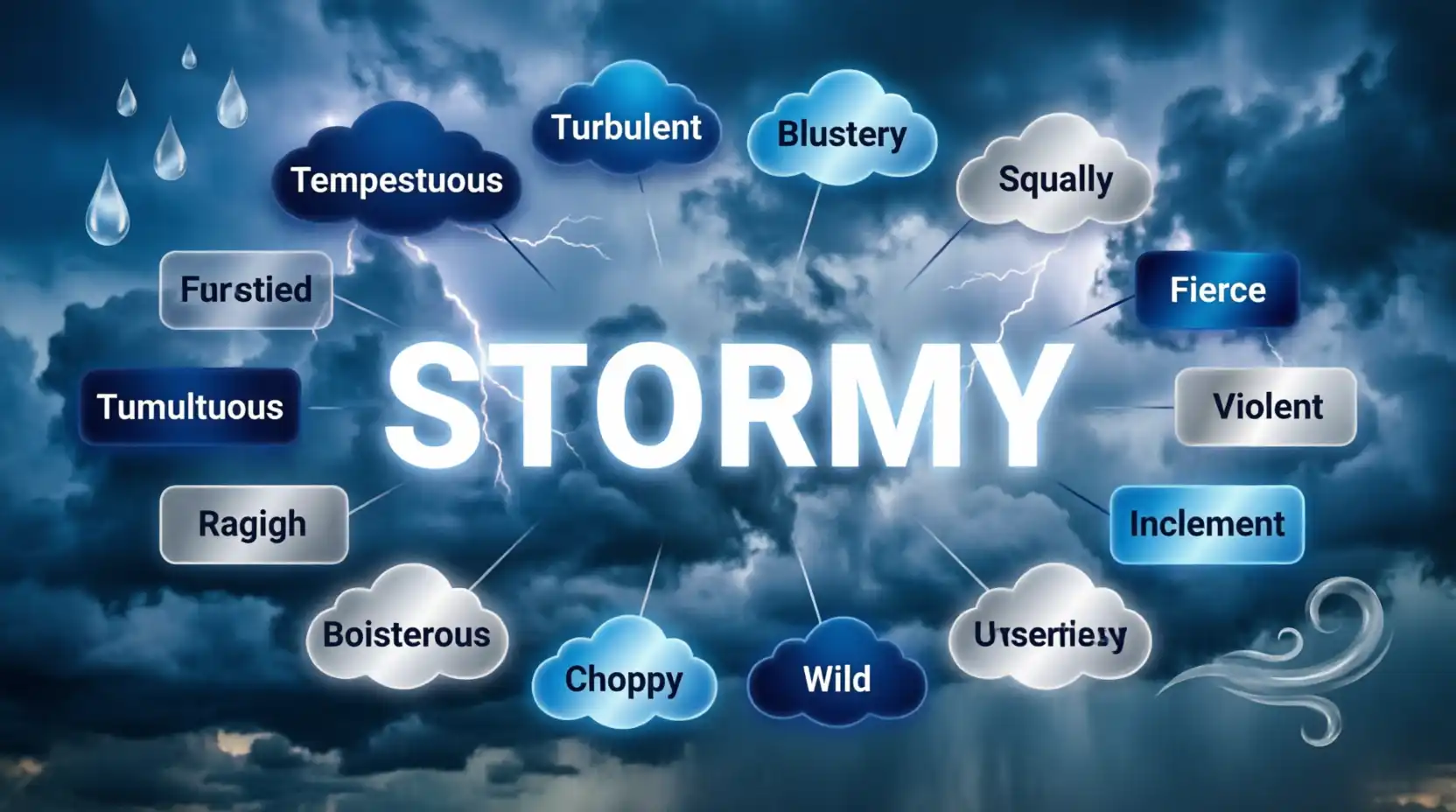
Stormy means having rough, windy, or unsettled weather conditions. Finding simple synonyms can help you describe weather more clearly and naturally.
Words like turbulent, rough, wild, fierce, blustery, tempestuous, and unsettled can describe stormy conditions in different situations.
These synonyms are useful for essays, stories, poems, conversations, and everyday writing when you want more variety.
In this guide, you will learn simple synonyms for stormy, along with clear meanings and examples to improve your vocabulary and writing skills.
Tempestuous
Meaning: Tempestuous means having very strong and rough weather.
Examples:
- The sailors faced tempestuous seas.
- A tempestuous night kept everyone awake.
Turbulent
Meaning: Turbulent means rough, wild, or full of sudden changes.
Examples:
- The plane flew through turbulent air.
- The river became turbulent after the rain.
Thunderous
Meaning: Thunderous means very loud like thunder.
Examples:
- A thunderous sound came from the sky.
- The thunderous rain woke the baby.
Blustery
Meaning: Blustery means having strong and cold winds.
Examples:
- It was a blustery morning by the lake.
- We stayed inside during the blustery weather.
Windy
Meaning: Windy means having a lot of moving air.
Examples:
- It was too windy to fly a kite.
- The windy afternoon made the trees move.
Rainy
Meaning: Rainy means having a lot of rain.
Examples:
- We had a rainy weekend.
- The rainy morning made the roads wet.
Wet
Meaning: Wet means covered or filled with water.
Examples:
- The garden was wet after the storm.
- My shoes became wet in the rain.
Stormy
Meaning: Stormy means having rough weather with strong wind, rain, or thunder.
Examples:
- The sky looked stormy before sunset.
- We canceled the picnic because it was stormy.
Squally
Meaning: Squally means having sudden strong winds and rain.
Examples:
- Squally weather delayed the boat trip.
- The coast had squally conditions overnight.
Tempestuous
Meaning: Tempestuous means very rough, wild, or violent.
Examples:
- The ship moved slowly through tempestuous waters.
- They waited for the tempestuous weather to pass.
Boisterous
Meaning: Boisterous means very loud, strong, and energetic.
Examples:
- Boisterous winds shook the windows.
- The sea became boisterous near the shore.
Violent
Meaning: Violent means very strong and forceful.
Examples:
- Violent winds damaged several trees.
- The storm brought violent waves to the coast.
Fierce
Meaning: Fierce means very strong and powerful.
Examples:
- Fierce winds pushed against the door.
- The beach was hit by fierce weather.
Wild
Meaning: Wild means uncontrolled, rough, or difficult to manage.
Examples:
- Wild weather changed our travel plans.
- The ocean looked wild during the storm.
Rough
Meaning: Rough means not calm or smooth.
Examples:
- The rough sea made the boat shake.
- We avoided the lake because the water was rough.
Dark
Meaning: Dark means having little or no light.
Examples:
- Dark clouds covered the town.
- The sky became dark before the rain started.
Cloudy
Meaning: Cloudy means covered with many clouds.
Examples:
- The morning was cloudy and cool.
- A cloudy sky appeared over the hills.
Gloomy
Meaning: Gloomy means dark, dull, or lacking brightness.
Examples:
- The gloomy sky made the park look quiet.
- We had a gloomy afternoon indoors.
Overcast
Meaning: Overcast means the sky is completely covered with clouds.
Examples:
- The sky stayed overcast all day.
- An overcast morning followed the rain.
Choppy
Meaning: Choppy means having many small rough waves.
Examples:
- The boat moved slowly through choppy water.
- Choppy waves made swimming unsafe.
Blusterous
Meaning: Blustrous means marked by strong and noisy winds.
Examples:
- A blustrous evening arrived near the coast.
- The hikers returned before the blustrous weather grew stronger.
Squally
Meaning: Squally means marked by sudden bursts of strong wind or rain.
Examples:
- Squally winds moved across the field.
- The fishermen waited for the squally conditions to end.
Unsettled
Meaning: Unsettled means changeable and not calm.
Examples:
- The weather remained unsettled all afternoon.
- Unsettled skies brought short periods of rain.
Unpredictable
Meaning: Unpredictable means difficult to know or expect.
Examples:
- Spring weather can be unpredictable.
- The unpredictable skies changed our plans.
Severe
Meaning: Severe means very strong or serious.
Examples:
- Severe weather closed the local airport.
- The town prepared for severe winds.
Harsh
Meaning: Harsh means unpleasant, strong, or difficult to endure.
Examples:
- Harsh winds made the walk difficult.
- The trees suffered during the harsh weather.
Drizzly
Meaning: Drizzly means having light rain with very small drops.
Examples:
- It was drizzly during our morning walk.
- A drizzly afternoon kept the streets quiet.
Rain-lashed
Meaning: Rain-lashed means strongly hit by heavy rain.
Examples:
- The rain-lashed streets were nearly empty.
- We watched the rain-lashed windows from inside.
Wind-swept
Meaning: Wind-swept means strongly affected by moving wind.
Examples:
- We walked along the wind-swept beach.
- The wind-swept hills looked dramatic.
Dark and Cloudy
Meaning: Dark and cloudy describes weather with little sunlight and many clouds.
Examples:
- The afternoon became dark and cloudy.
- Dark and cloudy skies covered the valley.
Conclusion
Learning synonyms for stormy gives you more ways to describe rough weather and difficult situations. These words can improve writing, blogging, speaking, and everyday communication. Students can use them in essays, while writers can make descriptions more vivid and natural. Practice these words in emails, school assignments, stories, and daily conversations. The more you use new vocabulary, the easier it becomes to choose the right word for every situation.