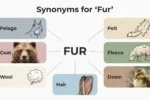
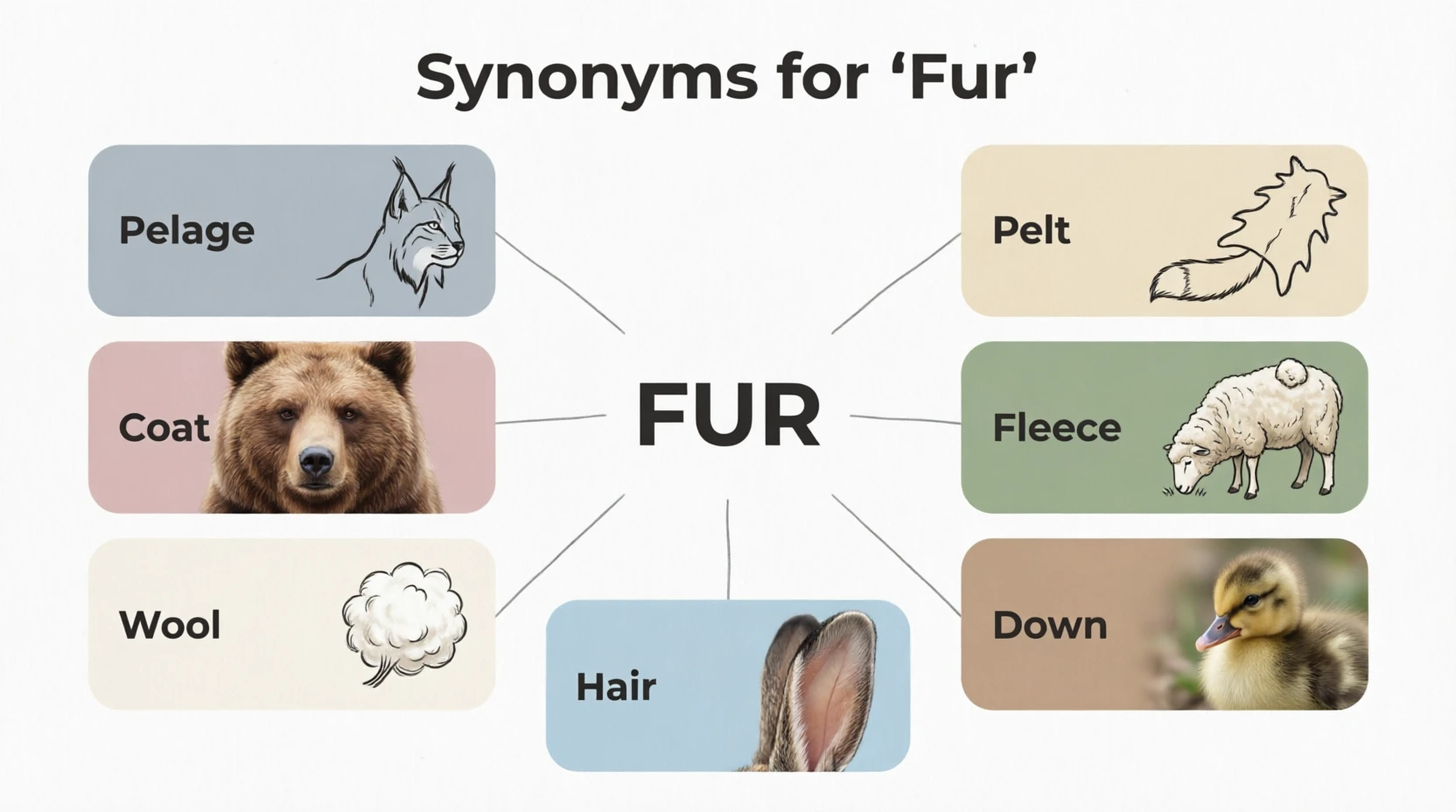
Looking for synonyms for fur? You can use different words to describe the soft hair or natural covering found on animals. These alternatives can make your writing more interesting, clear, and natural.
Common related words include coat, hair, fleece, pelt, and wool. However, each word can have a slightly different meaning depending on the animal and context.
Learning these alternatives can improve your vocabulary and help you avoid repeating the same word. They are useful for students, writers, bloggers, and English learners.
In this guide, you will discover simple synonyms for fur with clear meanings and examples. This makes it easier to understand each word and use it correctly in everyday writing.
1. Hair
Meaning: Hair is the thin strands that grow from an animal’s skin.
Examples:
- The puppy has soft hair.
- The rabbit’s hair feels warm.
2. Coat
Meaning: A coat is the layer of fur covering an animal’s body.
Examples:
- The dog has a thick coat.
- The fox grows a winter coat.
3. Pelt
Meaning: A pelt is the skin of an animal with its fur still attached.
Examples:
- The museum displayed an old animal pelt.
- The pelt had a thick outer layer.
4. Fleece
Meaning: Fleece is the soft woolly covering of some animals, especially sheep.
Examples:
- The sheep has a thick fleece.
- The farmer carefully cleaned the fleece.
5. Wool
Meaning: Wool is the soft hair of sheep and some other animals.
Examples:
- The sweater is made from wool.
- Sheep grow wool to help stay warm.
6. Down
Meaning: Down is the soft, fine feathers or hair that provide warmth.
Examples:
- The duck has soft down under its feathers.
- The jacket is filled with warm down.
7. Underfur
Meaning: Underfur is the soft layer of fur beneath an animal’s outer coat.
Examples:
- The cat has thick underfur.
- Underfur helps the animal stay warm.
8. Undercoat
Meaning: An undercoat is the soft inner layer beneath an animal’s outer coat.
Examples:
- The dog develops a thick undercoat in winter.
- Regular brushing removes loose undercoat.
9. Covering
Meaning: A covering is something that protects or surrounds an animal’s body.
Examples:
- Fur acts as a natural covering.
- The animal’s covering helps protect it from cold weather.
10. Coat Hair
Meaning: Coat hair refers to the hair that forms an animal’s outer coat.
Examples:
- The cat’s coat hair looks shiny.
- The brush removes loose coat hair.
11. Animal Hair
Meaning: Animal hair is hair that grows naturally on an animal’s body.
Examples:
- Some animals have very fine animal hair.
- The brush collected loose animal hair.
12. Body Hair
Meaning: Body hair is hair that grows across an animal’s body.
Examples:
- The animal has thick body hair.
- Its body hair keeps it warm.
13. Guard Hair
Meaning: Guard hair is the longer outer hair that protects an animal’s coat.
Examples:
- The fox has long guard hair.
- Guard hair can help keep rain away from the skin.
14. Woolly Coat
Meaning: A woolly coat is a thick and soft layer of animal hair.
Examples:
- The sheep has a warm woolly coat.
- The lamb’s woolly coat looks very soft.
15. Hair Coat
Meaning: A hair coat is the layer of hair covering an animal’s body.
Examples:
- The horse has a smooth hair coat.
- A healthy hair coat can look shiny.
16. Soft Coat
Meaning: A soft coat is an animal covering that feels smooth and gentle.
Examples:
- The rabbit has a soft coat.
- We noticed the kitten’s soft coat.
17. Thick Coat
Meaning: A thick coat is a dense layer of animal hair.
Examples:
- The bear has a thick coat.
- Its thick coat protects it from cold weather.
18. Dense Coat
Meaning: A dense coat is a closely packed layer of hair.
Examples:
- The animal has a dense coat.
- Its dense coat helps keep heat inside.
19. Shag
Meaning: Shag is long, thick, and untidy hair or fur.
Examples:
- The dog has a shag of thick hair.
- His pet’s shag needed regular brushing.
20. Fluff
Meaning: Fluff means soft, light, and loose hair or fur.
Examples:
- The kitten is covered in fluffy fur.
- A little fluff remained on the blanket.
21. Downy Hair
Meaning: Downy hair is very soft and fine hair.
Examples:
- The baby animal has downy hair.
- Its downy hair feels very soft.
22. Furry Coat
Meaning: A furry coat is a covering made of thick animal hair.
Examples:
- The puppy has a furry coat.
- Its furry coat keeps it warm.
23. Fur Coat
Meaning: A fur coat is the natural fur covering of an animal.
Examples:
- The fox has a beautiful fur coat.
- Its fur coat becomes thicker in winter.
24. Winter Coat
Meaning: A winter coat is thicker animal hair that grows for cold weather.
Examples:
- The horse grows a winter coat.
- The dog’s winter coat looks very thick.
25. Summer Coat
Meaning: A summer coat is the lighter coat many animals have during warmer months.
Examples:
- The deer has a shorter summer coat.
- Its summer coat looks lighter than its winter coat.
26. Natural Coat
Meaning: A natural coat is the hair covering an animal naturally grows.
Examples:
- The animal has a thick natural coat.
- Its natural coat protects its skin.
27. Outer Coat
Meaning: An outer coat is the top layer of an animal’s fur or hair.
Examples:
- The dog’s outer coat became wet.
- Its outer coat protects the softer layer below.
28. Inner Coat
Meaning: An inner coat is the softer layer beneath an animal’s outer hair.
Examples:
- The cat has a warm inner coat.
- Brushing helps remove loose inner coat hair.
29. Fur Layer
Meaning: A fur layer is a layer of hair covering an animal’s skin.
Examples:
- The animal has several layers of fur.
- Its fur layer helps protect it from cold.
30. Hair Covering
Meaning: A hair covering is hair that naturally covers an animal’s body.
Examples:
- The rabbit has a soft hair covering.
- Its hair covering helps protect its skin.
Conclusion
Learning synonyms for fur can make your English more descriptive and useful. These words help students write better essays, bloggers create richer animal descriptions, and content writers avoid repeated language. They are also useful in daily conversations about pets, wildlife, and nature. Practice these terms in emails, essays, stories, and everyday conversations. With regular use, you can describe animals with greater detail and confidence.