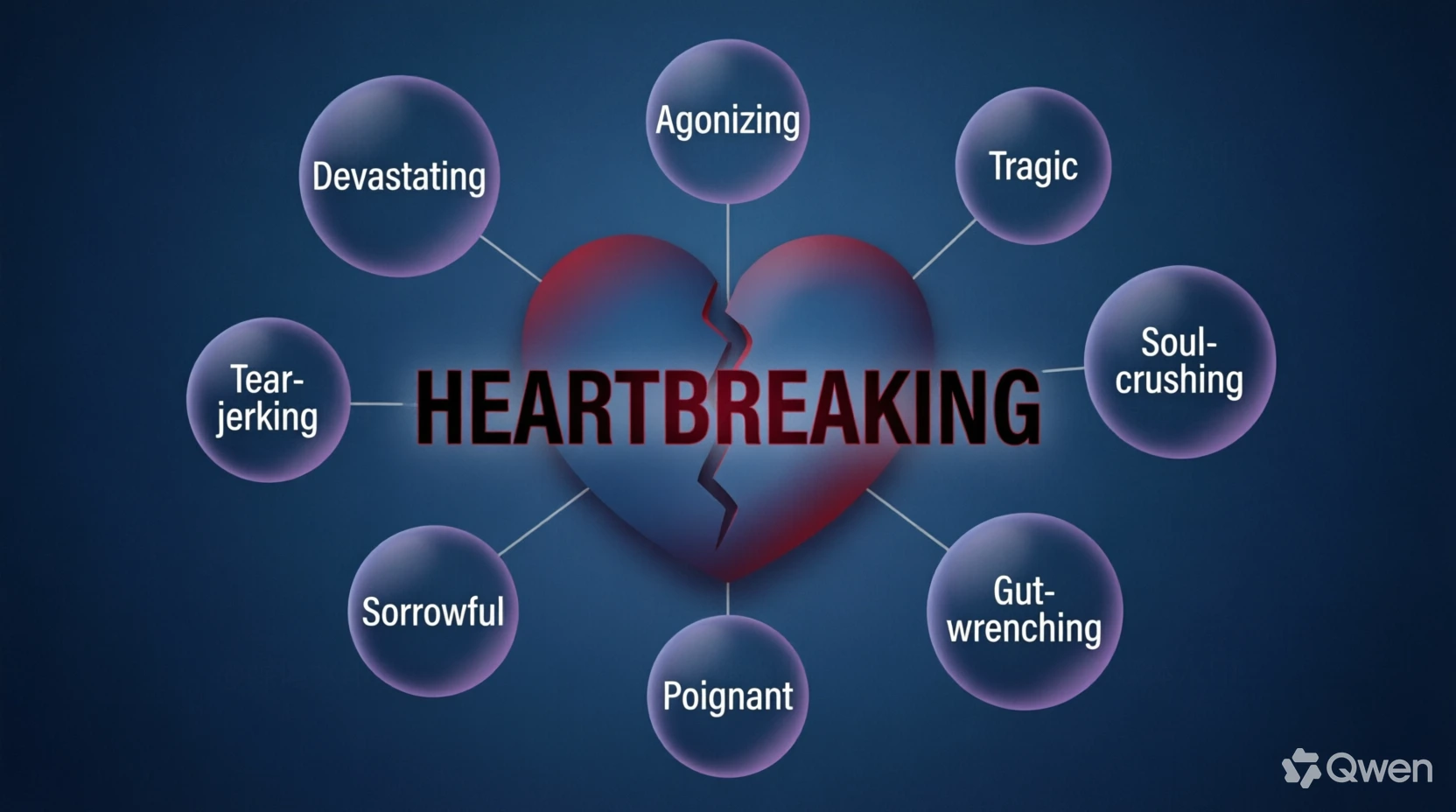
Finding synonyms for heartbreaking helps writers express deep sadness, emotional pain, grief, and difficult feelings with greater variety.
Words like devastating, sorrowful, tragic, painful, distressing, and crushing can describe situations that cause powerful emotional reactions.
These alternatives are helpful for students, writers, bloggers, and English learners who want clearer, stronger vocabulary choices.
In this guide, explore useful synonyms for heartbreaking, their meanings, and simple examples to understand their usage better.
Sad
Meaning: Sad means feeling unhappy or upset.
Examples:
- She felt sad after her friend moved away.
- The empty room made him sad.
Sorrowful
Meaning: Sorrowful means feeling deep sadness.
Examples:
- He looked sorrowful after hearing the news.
- Her sorrowful voice showed how hurt she was.
Painful
Meaning: Painful means causing strong emotional or physical hurt.
Examples:
- Saying goodbye was painful for everyone.
- It was painful to remember that day.
Devastating
Meaning: Devastating means causing very strong sadness or damage.
Examples:
- The family received devastating news.
- Losing the final match was devastating for the team.
Tragic
Meaning: Tragic means extremely sad because something terrible happened.
Examples:
- The movie tells a tragic story.
- It was a tragic end to a happy journey.
Distressing
Meaning: Distressing means causing worry, sadness, or emotional pain.
Examples:
- The report contained distressing details.
- Seeing the injured bird was distressing.
Mournful
Meaning: Mournful means showing deep sadness or grief.
Examples:
- A mournful song played in the background.
- His mournful expression caught her attention.
Miserable
Meaning: Miserable means very unhappy or uncomfortable.
Examples:
- She felt miserable after the argument.
- The rainy day left everyone miserable.
Gloomy
Meaning: Gloomy means sad, dark, or without much hope.
Examples:
- He was in a gloomy mood all morning.
- The gloomy weather matched her feelings.
Grieving
Meaning: Grieving means feeling deep sadness after a loss.
Examples:
- The grieving family stayed together.
- He was still grieving after the loss.
Devastated
Meaning: Devastated means extremely upset or deeply hurt.
Examples:
- She was devastated by the sudden news.
- He felt devastated when his plan failed.
Despairing
Meaning: Despairing means feeling that there is little or no hope.
Examples:
- His despairing words worried his friends.
- She gave a despairing sigh after the result.
Heart-rending
Meaning: Heart-rending means causing very strong sadness or emotional pain.
Examples:
- The film showed a heart-rending farewell.
- We read a heart-rending story about the family.
Wrenching
Meaning: Wrenching means causing strong emotional pain or sadness.
Examples:
- Their final goodbye was wrenching.
- It was a wrenching moment for everyone.
Disturbing
Meaning: Disturbing means making someone feel worried, upset, or troubled.
Examples:
- The message contained disturbing news.
- She had a disturbing dream last night.
Upsetting
Meaning: Upsetting means making someone feel sad or worried.
Examples:
- The sudden change was upsetting.
- It was upsetting to see her disappointed.
Melancholy
Meaning: Melancholy means a quiet feeling of sadness.
Examples:
- The old song created a sense of melancholy.
- He felt melancholy while looking through old photos.
Grievous
Meaning: Grievous means causing serious sadness or pain.
Examples:
- The family suffered a grievous loss.
- It was a grievous mistake with serious results.
Mournful
Meaning: Mournful means full of sadness because of loss.
Examples:
- The quiet room felt mournful.
- Her mournful words touched everyone.
Bleak
Meaning: Bleak means without hope and full of sadness.
Examples:
- The future looked bleak after the failure.
- He described the situation as bleak.
Dismal
Meaning: Dismal means very sad, gloomy, or unpleasant.
Examples:
- The team had a dismal season.
- His mood was dismal after the bad news.
Woeful
Meaning: Woeful means showing great sadness or trouble.
Examples:
- She gave a woeful look at the broken gift.
- His woeful voice made the room quiet.
Agonizing
Meaning: Agonizing means causing very strong emotional or physical pain.
Examples:
- Waiting for the answer was agonizing.
- The long separation became agonizing for them.
Tormenting
Meaning: Tormenting means causing ongoing emotional pain or distress.
Examples:
- The memory became tormenting over time.
- He had tormenting thoughts before the exam.
Crushing
Meaning: Crushing means causing a very strong feeling of sadness or defeat.
Examples:
- The rejection was crushing for her.
- It was a crushing disappointment for the players.
Shattering
Meaning: Shattering means causing someone to feel deeply shocked or emotionally broken.
Examples:
- The sudden announcement was shattering.
- Hearing the truth was shattering for him.
Bleeding
Meaning: Bleeding can describe something that seems to show deep emotional pain.
Examples:
- The poem felt like a bleeding heart on paper.
- Her words sounded like a bleeding wound of sadness.
Gut-wrenching
Meaning: Gut-wrenching means causing an intense feeling of sadness or emotional pain.
Examples:
- The farewell scene was gut-wrenching.
- Reading his letter was gut-wrenching.
Tearful
Meaning: Tearful means showing or causing tears because of sadness.
Examples:
- She gave a tearful goodbye at the station.
- His tearful speech moved the audience.
Heartbreaking
Meaning: Heartbreaking means causing very deep sadness or emotional pain.
Examples:
- The ending of the story was heartbreaking.
- It was heartbreaking to see the empty house.
Conclusion
Learning synonyms for heartbreaking gives you more ways to express strong emotions. These words can improve writing, blogging, speaking, and everyday communication. Instead of using “sad” every time, you can choose a word that fits the situation better. Practice these words in emails, essays, stories, and daily conversations. With regular practice, your English can become clearer, richer, and more natural.