A helper is someone who gives support, assistance, or guidance to another person. The word is commonly used for people who make tasks easier.
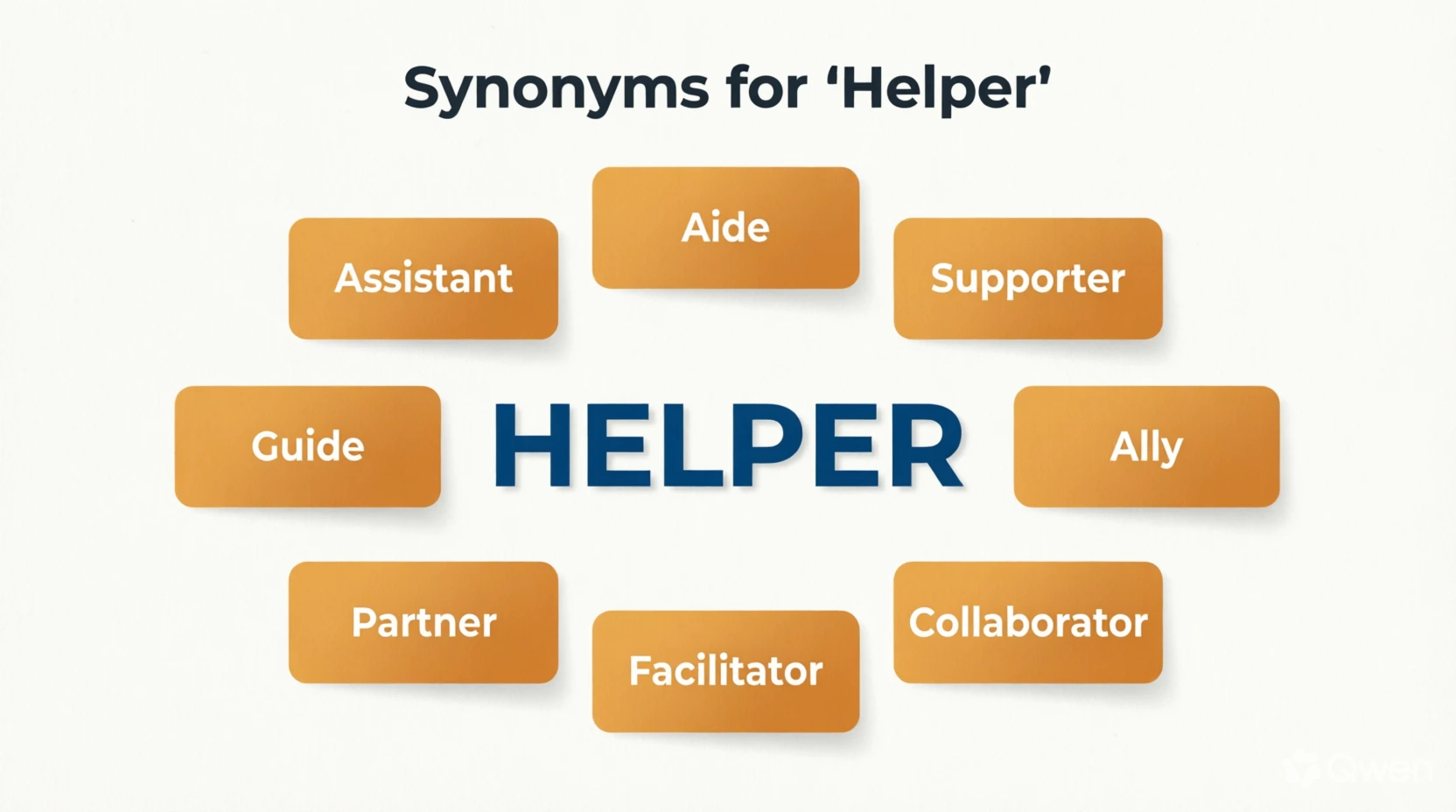
Common synonyms include assistant, supporter, aide, companion, volunteer, and worker. Each word can have a slightly different meaning.
Learning synonyms for helper can improve vocabulary and make writing more natural, clear, and interesting.
In this guide, you will find useful alternatives with simple meanings and examples for easy understanding.
Assistant
Meaning: An assistant is a person who helps someone with a task or job.
Examples:
- The teacher asked her assistant to help the students.
- I work as an assistant at the office.
Aide
Meaning: An aide is someone who gives help and support to another person.
Examples:
- The nurse had an aide during the busy shift.
- A classroom aide helped the young students.
Supporter
Meaning: A supporter is someone who gives help or encouragement.
Examples:
- My brother is always a strong supporter.
- The team thanked every supporter after the game.
Helper
Meaning: A helper is a person who helps someone complete a task.
Examples:
- The teacher needed a helper for the activity.
- My little brother was my helper in the garden.
Volunteer
Meaning: A volunteer is someone who freely gives time to help others.
Examples:
- She became a volunteer at the local library.
- Many volunteers helped clean the park.
Caregiver
Meaning: A caregiver is a person who takes care of someone who needs help.
Examples:
- The caregiver helped the older man each morning.
- She works as a caregiver for children.
Assistant Worker
Meaning: An assistant worker helps another person with regular work or tasks.
Examples:
- The assistant worker prepared the tools.
- He hired an assistant worker for the project.
Collaborator
Meaning: A collaborator is someone who works with others on the same task.
Examples:
- She was my collaborator on the school project.
- We found a new collaborator for our website.
Partner
Meaning: A partner is someone who works with you to reach a goal.
Examples:
- My partner helped me finish the assignment.
- He is my partner in the science project.
Ally
Meaning: An ally is someone who supports and helps you.
Examples:
- Her best friend was an ally during the challenge.
- We need an ally to support our plan.
Accomplice
Meaning: An accomplice is a person who helps another person do something, often something wrong.
Examples:
- The thief had an accomplice.
- Police said his accomplice helped with the crime.
Facilitator
Meaning: A facilitator helps a group work together and reach a goal.
Examples:
- The facilitator guided our group discussion.
- Our teacher acted as a facilitator during the workshop.
Aiding Person
Meaning: An aiding person gives support or help to someone else.
Examples:
- An aiding person stayed with the injured player.
- The group needed an aiding person for the event.
Counselor
Meaning: A counselor is someone who gives advice and support.
Examples:
- The school counselor helped me solve the problem.
- She spoke with a counselor about her studies.
Mentor
Meaning: A mentor is an experienced person who helps someone learn and improve.
Examples:
- My mentor taught me useful writing skills.
- She found a mentor to guide her career.
Guide
Meaning: A guide is someone who shows another person what to do or where to go.
Examples:
- Our guide showed us around the museum.
- The book became a helpful guide for beginners.
Advisor
Meaning: An advisor is someone who gives useful advice and guidance.
Examples:
- The student spoke with an academic advisor.
- Our advisor helped us choose the right course.
Counselor
Meaning: A counselor is a person who helps others by giving advice or support.
Examples:
- The counselor listened to the student’s concerns.
- We met the school counselor after class.
Defender
Meaning: A defender is someone who protects or supports another person.
Examples:
- He became a defender of the new students.
- The defender spoke up for his friend.
Advocate
Meaning: An advocate is someone who publicly supports a person, idea, or cause.
Examples:
- She is an advocate for better schools.
- He became an advocate for children’s education.
Protector
Meaning: A protector is someone who keeps another person safe from harm.
Examples:
- The dog acted as a protector of the family.
- She was a protector of the younger children.
Benefactor
Meaning: A benefactor is someone who gives money or help to support others.
Examples:
- A local benefactor donated books to the school.
- The hospital thanked its generous benefactor.
Samaritan
Meaning: A Samaritan is a kind person who helps someone in need.
Examples:
- A good Samaritan helped the lost child.
- A Samaritan stopped to help the driver.
Aiding Hand
Meaning: An aiding hand means a person who gives useful help or support.
Examples:
- She gave me an aiding hand with my homework.
- We needed an aiding hand during the event.
Right-Hand Person
Meaning: A right-hand person is someone trusted to give important help.
Examples:
- She is the manager’s right-hand person.
- His right-hand person handles many daily tasks.
Team Member
Meaning: A team member is someone who works with others to complete a shared task.
Examples:
- Every team member helped with the presentation.
- Our team member found a simple solution.
Coworker
Meaning: A coworker is someone who works with you.
Examples:
- My coworker helped me finish the report.
- I asked a coworker for advice.
Companion
Meaning: A companion is someone who stays with and supports another person.
Examples:
- Her friend was a helpful companion on the trip.
- He brought a companion to the event.
Servant
Meaning: A servant is a person who works to serve or help another person.
Examples:
- The servant prepared the room for the guests.
- The story describes a loyal servant.
Aiding Force
Meaning: An aiding force is a person or group that provides help or support.
Examples:
- The rescue team became an aiding force.
- Extra workers were an aiding force during the project.
Conclusion
Learning synonyms for helper can make your writing more clear and varied. These words help students improve essays, bloggers create better content, and writers avoid using the same word too often. They can also make speaking and daily communication easier. Practice these synonyms in emails, essays, blog posts, and conversations. The more you use them, the easier it becomes to choose the right word for every situation.