
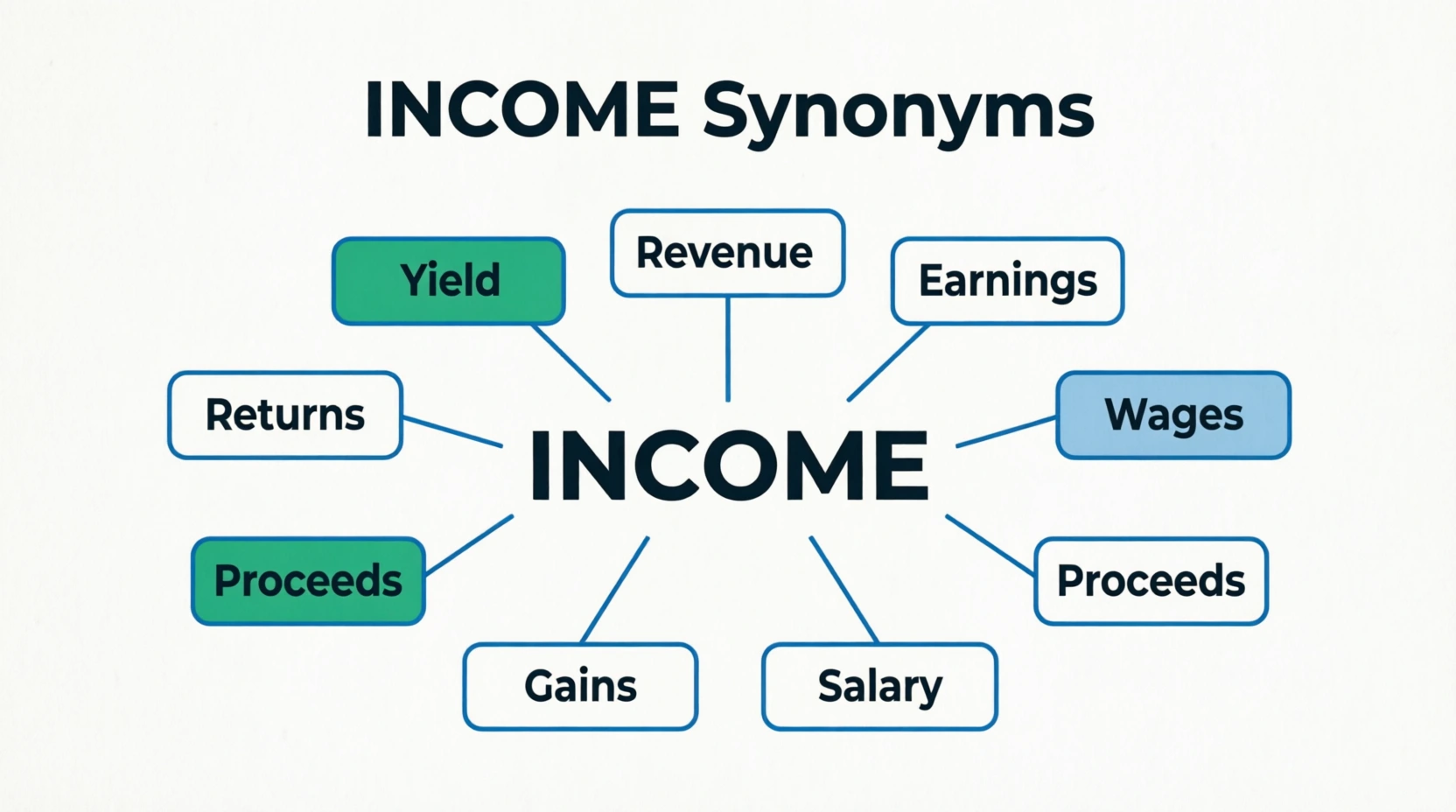
Finding the right synonyms for income can make your writing clearer, more natural, and varied. These words help describe money earned from work, business, investments, or other sources.
Common alternatives include earnings, revenue, salary, wages, profit, and proceeds. Each word has a slightly different meaning and works better in certain situations.
Learning these alternatives can strengthen your English vocabulary and improve communication skills. They are useful for students, writers, bloggers, and professionals.
In this guide, you will discover useful synonyms for income, along with simple meanings and examples. This makes choosing the right word easier.
Earnings
Meaning: Earnings are the money a person gets from work or business.
Examples:
- Her earnings increased this month.
- He saves part of his earnings.
Revenue
Meaning: Revenue is the money a business receives from selling goods or services.
Examples:
- The store made more revenue this year.
- Online sales brought extra revenue.
Salary
Meaning: A salary is regular money paid to an employee for their work.
Examples:
- She receives her salary every month.
- His new salary is higher.
Wages
Meaning: Wages are money paid for work, often based on hours or days worked.
Examples:
- The workers received their wages on Friday.
- His weekly wages cover his basic needs.
Pay
Meaning: Pay is the money someone receives for doing a job.
Examples:
- The company offers good pay.
- She gets her pay at the end of each month.
Profit
Meaning: Profit is the money left after a business pays its costs.
Examples:
- The shop made a small profit.
- Higher sales helped increase the profit.
Return
Meaning: A return is money earned from an investment.
Examples:
- The investment gave him a good return.
- She hopes for a better return next year.
Interest
Meaning: Interest is money earned from saving or lending money.
Examples:
- The bank paid interest on his savings.
- Her account earns interest each month.
Dividend
Meaning: A dividend is money paid to shareholders from a company’s profits.
Examples:
- The company announced a dividend.
- Investors received their dividend in June.
Commission
Meaning: Commission is money earned from making a sale or completing a deal.
Examples:
- She earns commission on every sale.
- His commission grew after a busy month.
Allowance
Meaning: An allowance is a regular amount of money given for personal use.
Examples:
- The child receives a weekly allowance.
- She uses her allowance to buy books.
Pension
Meaning: A pension is regular money paid to someone after they stop working.
Examples:
- His pension helps pay the bills.
- She receives a monthly pension.
Royalties
Meaning: Royalties are payments made to someone when their work, property, or creation is used.
Examples:
- The writer earns royalties from her books.
- The musician receives royalties from his songs.
Fees
Meaning: Fees are payments received for providing a service.
Examples:
- The lawyer charges reasonable fees.
- The consultant earns fees from each project.
Receipts
Meaning: Receipts can mean money received by a person or business from sales or payments.
Examples:
- The shop had strong receipts this weekend.
- Daily receipts were higher than expected.
Proceeds
Meaning: Proceeds are the money received from a sale or event.
Examples:
- The proceeds from the sale went to charity.
- They donated the event proceeds.
Cash Flow
Meaning: Cash flow is the movement of money coming into and going out of a business.
Examples:
- Good cash flow helps the company operate.
- The business improve its cash flow.
Turnover
Meaning: Turnover is the total money a business makes from sales during a period.
Examples:
- The company reported higher turnover.
- Annual turnover grew after the launch.
Gain
Meaning: A gain is money made from an increase in value.
Examples:
- She made a gain on the investment.
- The property produced a large gain.
Yield
Meaning: Yield is the amount of money an investment produces.
Examples:
- The bond offers a steady yield.
- Investors looked for a higher yield.
Remuneration
Meaning: Remuneration is payment given to someone for their work or service.
Examples:
- The position offers fair remuneration.
- Employees discussed their remuneration packages.
Compensation
Meaning: Compensation is money or another benefit given for work or a loss.
Examples:
- The employee received compensation for the work.
- The company offered fair compensation.
Stipend
Meaning: A stipend is a fixed amount of money given for study, training, or special work.
Examples:
- The student received a monthly stipend.
- Her internship included a small stipend.
Livelihood
Meaning: A livelihood is the work or income someone uses to support daily life.
Examples:
- Farming is his main livelihood.
- Tourism provides a livelihood for many families.
Subsistence
Meaning: Subsistence is the basic money or resources needed to live.
Examples:
- The farm provides basic subsistence.
- The program supports families at a subsistence level.
Funding
Meaning: Funding is money provided to support a person, project, or organization.
Examples:
- The project received new funding.
- More funding will support the program.
Financial Support
Meaning: Financial support is money given to help someone meet their needs.
Examples:
- Her family provided financial support.
- The student received financial support for college.
Monetary Gain
Meaning: Monetary gain is money received as a benefit or increase.
Examples:
- The deal brought a large monetary gain.
- They were interested in possible monetary gain.
Monetary Return
Meaning: A monetary return is money received from an investment or activity.
Examples:
- The project produced a good monetary return.
- Investors wanted a steady monetary return.
Money Received
Meaning: Money received means any amount of money that comes to a person or organization.
Examples:
- The money received covered the expenses.
- She recorded all the money received that day.
Conclusion
Learning synonyms for income gives you more ways to talk about money, work, business, and financial growth. Words such as earnings, salary, wages, revenue, profit, and commission each fit different situations. Using the right word can make your writing and speaking clearer. Try these terms in emails, essays, blog posts, and daily conversations. With regular practice, you can describe financial ideas with greater confidence and accuracy.