Metacognition is the ability to think about your own thoughts and learning. It helps you understand how you learn, solve problems, and improve your thinking skills.
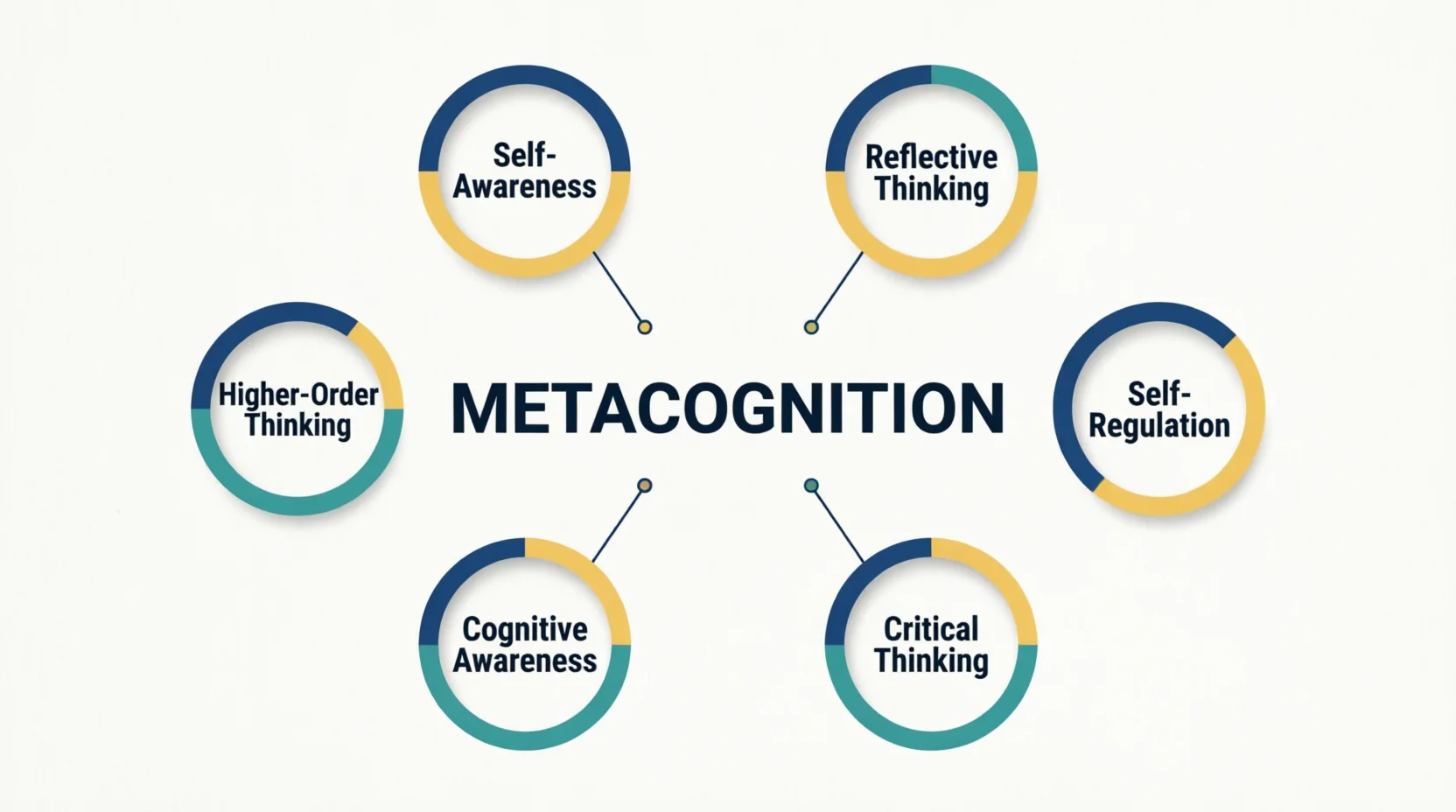
Finding synonyms for metacognition can make your writing more varied and easier to understand. These related words can describe self-awareness, reflective thinking, learning awareness, and mental reflection.
They are useful for students, teachers, writers, and researchers who want to explain learning and thinking clearly.
In this guide, you will discover simple alternatives to metacognition and learn how each term can be used naturally in different contexts.
1. Self-Awareness
Meaning: Self-awareness means knowing your own thoughts, feelings, strengths, and limits.
Examples:
- Self-awareness helped Mia understand why she was distracted.
- His self-awareness made him change his study habits.
2. Self-Reflection
Meaning: Self-reflection means thinking carefully about your own actions and thoughts.
Examples:
- Self-reflection helped me understand my mistake.
- She used self-reflection after the difficult lesson.
3. Self-Monitoring
Meaning: Self-monitoring means watching your own thoughts, actions, or progress.
Examples:
- Self-monitoring helped Tom stay focused during homework.
- She used self-monitoring to track her reading progress.
4. Self-Regulation
Meaning: Self-regulation means managing your thoughts, feelings, and actions to reach a goal.
Examples:
- Self-regulation helped him avoid checking his phone.
- Good self-regulation can support better study habits.
5. Self-Assessment
Meaning: Self-assessment means checking your own knowledge, skills, or work.
Examples:
- I used self-assessment before taking the test.
- Her self-assessment showed that she needed more practice.
6. Self-Evaluation
Meaning: Self-evaluation means judging your own work or progress.
Examples:
- The teacher asked us to complete a self-evaluation.
- His self-evaluation helped him find areas to improve.
7. Self-Questioning
Meaning: Self-questioning means asking yourself questions to understand something better.
Examples:
- Self-questioning helped Sara understand the chapter.
- I use self-questioning when a topic feels confusing.
8. Reflective Thinking
Meaning: Reflective thinking means carefully thinking about what you learned or experienced.
Examples:
- Reflective thinking helped the class learn from the activity.
- He used reflective thinking after finishing the project.
9. Critical Self-Reflection
Meaning: Critical self-reflection means carefully examining your own thoughts and choices.
Examples:
- Critical self-reflection helped her improve her writing.
- He practiced critical self-reflection after the group task.
10. Thinking About Thinking
Meaning: Thinking about thinking means noticing how your mind learns, understands, and solves problems.
Examples:
- Thinking about thinking helped me choose a better study plan.
- The lesson taught us the value of thinking about thinking.
11. Learning Awareness
Meaning: Learning awareness means knowing how well you understand and learn something.
Examples:
- Learning awareness helped Jack notice his weak areas.
- Her learning awareness improved during the course.
12. Cognitive Awareness
Meaning: Cognitive awareness means being aware of your own mental processes.
Examples:
- Cognitive awareness helped the student understand his learning style.
- The activity increased our cognitive awareness.
13. Cognitive Self-Awareness
Meaning: Cognitive self-awareness means noticing how your own mind processes information.
Examples:
- Cognitive self-awareness helped me understand why I forgot the rule.
- She developed cognitive self-awareness through regular reflection.
14. Learning Self-Awareness
Meaning: Learning self-awareness means understanding how you learn and where you need help.
Examples:
- Learning self-awareness helped Ben choose better notes.
- Her learning self-awareness grew after several practice tests.
15. Mental Self-Awareness
Meaning: Mental self-awareness means noticing your own thoughts and mental habits.
Examples:
- Mental self-awareness helped him notice negative thinking.
- She built mental self-awareness by keeping a learning journal.
16. Thought Awareness
Meaning: Thought awareness means noticing the thoughts that happen in your mind.
Examples:
- Thought awareness helped me notice when I lost focus.
- The exercise improved her thought awareness.
17. Learning Reflection
Meaning: Learning reflection means thinking about what you learned and how you learned it.
Examples:
- Learning reflection was part of our weekly class work.
- His learning reflection showed clear progress.
18. Reflective Learning
Meaning: Reflective learning means learning by thinking about your experiences and results.
Examples:
- Reflective learning helped the team improve its project.
- She used reflective learning after each lesson.
19. Self-Directed Learning
Meaning: Self-directed learning means taking control of your own learning process.
Examples:
- Self-directed learning helped Omar study outside class.
- She enjoys self-directed learning through online courses.
20. Learning Self-Management
Meaning: Learning self-management means organizing and controlling your own learning.
Examples:
- Learning self-management helped me finish my tasks on time.
- Good learning self-management made her study routine easier.
21. Cognitive Self-Regulation
Meaning: Cognitive self-regulation means managing your thinking to support learning and problem-solving.
Examples:
- Cognitive self-regulation helped him stay focused on the task.
- She used cognitive self-regulation when the problem became difficult.
22. Thought Monitoring
Meaning: Thought monitoring means watching your thoughts while you work or learn.
Examples:
- Thought monitoring helped me notice when I became distracted.
- He practiced thought monitoring during the reading task.
23. Learning Monitoring
Meaning: Learning monitoring means checking your understanding and progress while learning.
Examples:
- Learning monitoring helped the student find a difficult topic.
- I use learning monitoring when preparing for exams.
24. Knowledge Awareness
Meaning: Knowledge awareness means knowing what you understand and what you still need to learn.
Examples:
- Knowledge awareness helped Maya choose what to review.
- His knowledge awareness improved after the practice quiz.
25. Strategy Awareness
Meaning: Strategy awareness means knowing which methods help you complete a task.
Examples:
- Strategy awareness helped me choose a better reading method.
- Her strategy awareness improved after trying different study tools.
26. Learning Strategy Awareness
Meaning: Learning strategy awareness means knowing which learning methods work best for you.
Examples:
- Learning strategy awareness helped him change his revision plan.
- She developed learning strategy awareness through practice.
27. Metamemory
Meaning: Metamemory means knowing how your own memory works and how well you remember things.
Examples:
- Metamemory helped me know which facts I needed to review.
- Her metamemory improved as she practiced recalling information.
28. Metacomprehension
Meaning: Metacomprehension means knowing how well you understand something you read or hear.
Examples:
- Metacomprehension helped the student notice that the article was confusing.
- I checked my metacomprehension after reading the chapter.
29. Metacognitive Awareness
Meaning: Metacognitive awareness means knowing how your own thinking and learning work.
Examples:
- Metacognitive awareness helped her choose a useful study method.
- The activity increased students’ metacognitive awareness.
30. Metacognitive Thinking
Meaning: Metacognitive thinking means thinking about how you think, learn, and solve problems.
Examples:
- Metacognitive thinking helped me improve my study routine.
- The teacher encouraged metacognitive thinking during the lesson.
Conclusion
Learning related terms for metacognition can make your writing and speaking more precise. Words such as self-awareness, self-reflection, self-monitoring, self-assessment, and metacognitive awareness help explain different parts of thinking and learning. Students can use them in essays, while bloggers and content writers can create clearer educational content. Practice these terms in emails, essays, class discussions, and daily conversations to build stronger English skills.