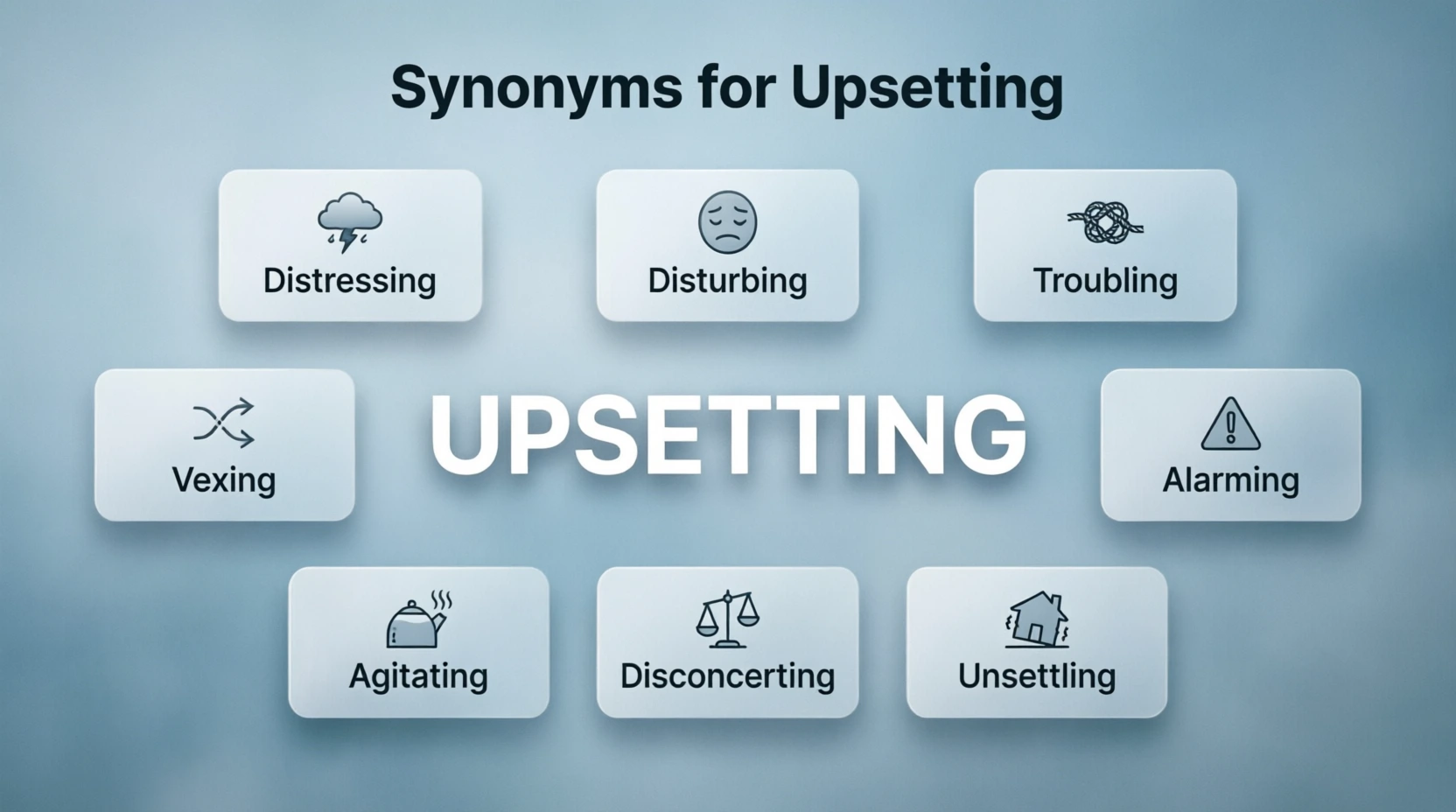
Finding the right synonyms for upsetting can make your writing clearer, stronger, and more expressive.
The word upsetting describes something that causes sadness, worry, disappointment, or emotional discomfort.
In this guide, you’ll discover simple synonyms for upsetting with easy meanings and examples.
These useful words can help students, writers, bloggers, and English learners express feelings more naturally.
Distressing
Meaning: Something distressing makes you feel very sad, worried, or uncomfortable.
Examples:
- The news was distressing for everyone.
- She found the story very distressing.
Saddening
Meaning: Something saddening makes you feel sad.
Examples:
- The empty playground was saddening.
- His goodbye was a saddening moment.
Troubling
Meaning: Something troubling causes worry or concern.
Examples:
- The strange message was troubling.
- Her sudden silence was troubling to me.
Disheartening
Meaning: Something disheartening makes you lose hope or confidence.
Examples:
- The poor result was disheartening.
- Missing the goal was disheartening for the team.
Painful
Meaning: Something painful causes emotional or physical hurt.
Examples:
- It was painful to hear the truth.
- Losing the old photo was painful.
Hurtful
Meaning: Something hurtful causes emotional pain.
Examples:
- His words were hurtful.
- That comment felt hurtful to her.
Unpleasant
Meaning: Something unpleasant is not nice or enjoyable.
Examples:
- We had an unpleasant experience.
- The smell made the room unpleasant.
Disturbing
Meaning: Something disturbing makes you feel worried or uncomfortable.
Examples:
- I saw a disturbing message online.
- The strange noise was disturbing.
Alarming
Meaning: Something alarming makes you feel sudden fear or worry.
Examples:
- The loud sound was alarming.
- The report gave us alarming news.
Worrying
Meaning: Something worrying makes you feel concerned about what may happen.
Examples:
- The delay was worrying.
- His fever became worrying by evening.
Shocking
Meaning: Something shocking surprises you in a strong way.
Examples:
- The sudden news was shocking.
- Her decision was shocking to everyone.
Devastating
Meaning: Something devastating causes very deep sadness or loss.
Examples:
- The accident was devastating for the town.
- Losing the match was devastating for the players.
Heartbreaking
Meaning: Something heartbreaking makes you feel very sad.
Examples:
- The farewell scene was heartbreaking.
- Her story was heartbreaking to hear.
Depressing
Meaning: Something depressing makes you feel very sad or low.
Examples:
- The dark weather felt depressing.
- The empty house looked depressing.
Gloomy
Meaning: Something gloomy feels sad, dark, or without much hope.
Examples:
- The room had a gloomy feeling.
- His mood became gloomy after the news.
Miserable
Meaning: Miserable describes a person or situation that feels very unhappy.
Examples:
- He felt miserable after the argument.
- The rainy day made me miserable.
Sorrowful
Meaning: Something sorrowful shows or causes deep sadness.
Examples:
- She gave a sorrowful smile.
- The song had a sorrowful sound.
Regrettable
Meaning: Something regrettable is something you wish had not happened.
Examples:
- The mistake was regrettable.
- Their argument was a regrettable event.
Frustrating
Meaning: Something frustrating makes you feel annoyed because things are not going well.
Examples:
- The slow internet was frustrating.
- Waiting for hours became frustrating.
Aggravating
Meaning: Something aggravating makes you feel annoyed or angry.
Examples:
- The constant noise was aggravating.
- His repeated questions became aggravating.
Annoying
Meaning: Something annoying bothers you or makes you irritated.
Examples:
- The buzzing sound was annoying.
- Her repeated calls became annoying.
Irritating
Meaning: Something irritating bothers you and makes you feel annoyed.
Examples:
- The bright light was irritating.
- His loud voice was irritating.
Displeasing
Meaning: Something displeasing is not liked or welcomed.
Examples:
- The final result was displeasing.
- The change was displeasing to many people.
Dismaying
Meaning: Something dismaying makes you feel worried, upset, or disappointed.
Examples:
- The sudden loss was dismaying.
- The poor condition of the park was dismaying.
Disappointing
Meaning: Something disappointing does not meet your hopes or expectations.
Examples:
- The movie ending was disappointing.
- The test score was disappointing.
Disconcerting
Meaning: Something disconcerting makes you feel unsure or uncomfortable.
Examples:
- His strange answer was disconcerting.
- The sudden change was disconcerting.
Displeasing
Meaning: Something displeasing causes a person to feel unhappy with it.
Examples:
- The new rule was displeasing to students.
- The poor service was displeasing.
Agitating
Meaning: Something agitating makes you feel nervous, angry, or upset.
Examples:
- The loud debate was agitating.
- The long delay became agitating.
Grieving
Meaning: Grieving describes deep sadness after losing someone or something important.
Examples:
- The family was grieving after the loss.
- He was still grieving for his old friend.
Woeful
Meaning: Something woeful is very sad, bad, or full of trouble.
Examples:
- The team had a woeful season.
- His woeful expression showed his sadness.
Conclusion
Learning synonyms for upsetting can make your writing and speaking more flexible. These words help you describe sadness, worry, anger, disappointment, and other difficult feelings with greater accuracy. Students can use them in essays, while bloggers and content writers can make their work more varied. Daily English users can practice them in emails, messages, and conversations. Try using a new word each day to build confidence and improve communication.