A treaty is a formal agreement between countries or groups, often created to maintain peace.
If you are looking for synonyms for treaty, several useful words can express similar ideas.
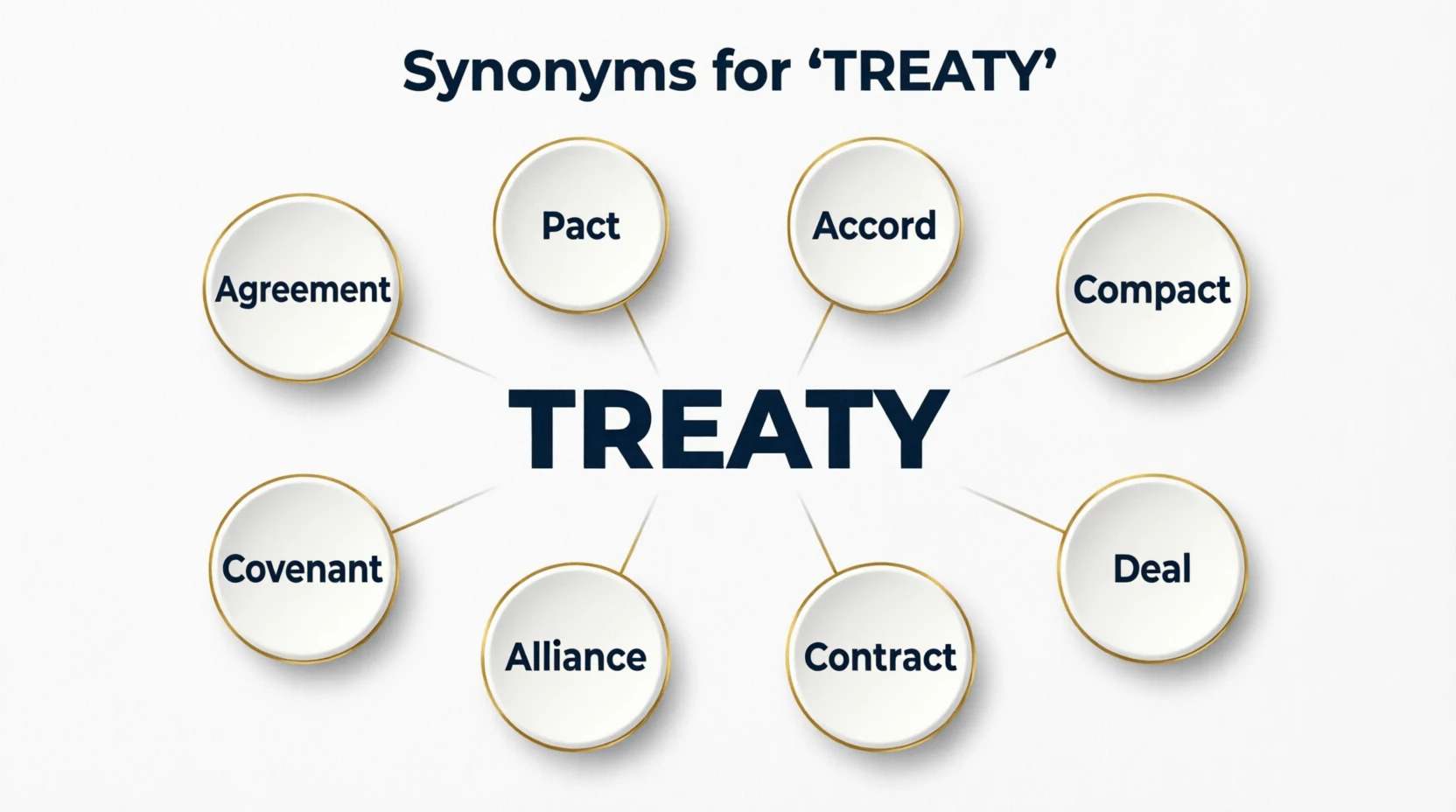
Words like pact, agreement, accord, covenant, and settlement may fit different situations and contexts well.
Learning these alternatives can improve your vocabulary and help you choose the right word confidently.
Agreement
Meaning: An agreement is a decision or promise made by two or more sides.
Examples:
- The two groups reached an agreement.
- We signed an agreement yesterday.
Pact
Meaning: A pact is a formal promise between two or more people or groups.
Examples:
- The nations made a peace pact.
- The leaders signed a secret pact.
Accord
Meaning: An accord is a formal agreement between people, groups, or countries.
Examples:
- The countries reached an accord.
- The new accord brought peace to the region.
Compact
Meaning: A compact is a formal agreement or promise between two sides.
Examples:
- The nations signed a trade compact.
- The compact created new rules.
Covenant
Meaning: A covenant is a serious and formal promise between two sides.
Examples:
- The leaders made a strong covenant.
- Their covenant required mutual support.
Deal
Meaning: A deal is an agreement in which both sides accept certain terms.
Examples:
- The two companies made a deal.
- They reached a deal after long talks.
Settlement
Meaning: A settlement is an agreement that ends a dispute or problem.
Examples:
- The groups reached a settlement.
- The settlement ended the long dispute.
Truce
Meaning: A truce is an agreement to stop fighting for a period of time.
Examples:
- The two armies agreed to a truce.
- The truce lasted for three days.
Armistice
Meaning: An armistice is an agreement to stop fighting between opposing sides.
Examples:
- The armies declared an armistice.
- The armistice brought a pause in the war.
Convention
Meaning: A convention is a formal agreement about rules or shared actions.
Examples:
- The countries signed an international convention.
- The convention protects important rights.
Protocol
Meaning: A protocol is a formal agreement that sets rules for cooperation.
Examples:
- The nations approved a new protocol.
- The protocol explains how both sides should work together.
Understanding
Meaning: An understanding is an agreement based on shared ideas or promises.
Examples:
- The leaders reached an understanding.
- Both sides have a clear understanding.
Arrangement
Meaning: An arrangement is a planned agreement between two or more sides.
Examples:
- We made an arrangement with the other team.
- The arrangement helped both groups.
Contract
Meaning: A contract is a written agreement that gives each side certain duties.
Examples:
- The company signed a new contract.
- Both sides followed the contract.
Promise
Meaning: A promise is a statement that someone will do something.
Examples:
- The leader made a promise to the people.
- They kept their promise.
Commitment
Meaning: A commitment is a firm promise to do something.
Examples:
- Both countries made a commitment to peace.
- The agreement shows their commitment.
Resolution
Meaning: A resolution is a formal decision made to solve a problem.
Examples:
- The council passed a resolution.
- The resolution called for peace.
Declaration
Meaning: A declaration is a formal public statement about a decision or position.
Examples:
- The leaders issued a declaration.
- The declaration supported peaceful talks.
Charter
Meaning: A charter is a formal document that explains rules, rights, or duties.
Examples:
- The nations created a shared charter.
- The charter sets clear rules.
Accordance
Meaning: Accordance means acting in agreement with a rule or decision.
Examples:
- The plan was made in accordance with the agreement.
- They acted in accordance with the new rules.
Coalition
Meaning: A coalition is a group that joins together for a shared purpose.
Examples:
- Several nations formed a coalition.
- The coalition worked for regional peace.
Alliance
Meaning: An alliance is a formal relationship in which sides agree to support each other.
Examples:
- The countries formed an alliance.
- Their alliance lasted for many years.
Partnership
Meaning: A partnership is a relationship in which two or more sides work together.
Examples:
- The nations began a new partnership.
- Their partnership improved trade.
Cooperation
Meaning: Cooperation means working together to reach a shared goal.
Examples:
- The agreement encouraged cooperation.
- Both countries promised greater cooperation.
Negotiated Agreement
Meaning: A negotiated agreement is a deal reached after both sides discuss their terms.
Examples:
- The leaders reached a negotiated agreement.
- The negotiated agreement ended the talks.
Peace Agreement
Meaning: A peace agreement is a formal deal made to end conflict and support peace.
Examples:
- The countries signed a peace agreement.
- The peace agreement ended years of fighting.
Trade Agreement
Meaning: A trade agreement is a deal that sets rules for buying and selling between sides.
Examples:
- The countries signed a trade agreement.
- The new trade agreement reduced some taxes.
Nonaggression Pact
Meaning: A nonaggression pact is an agreement in which sides promise not to attack each other.
Examples:
- The countries signed a nonaggression pact.
- The pact helped prevent a new conflict.
Mutual Agreement
Meaning: A mutual agreement is a decision that all involved sides accept.
Examples:
- The plan was approved by mutual agreement.
- They changed the rule by mutual agreement.
Formal Agreement
Meaning: A formal agreement is an official deal accepted by two or more sides.
Examples:
- The governments signed a formal agreement.
- The formal agreement lists their duties.
Written Agreement
Meaning: A written agreement is a deal recorded in a document.
Examples:
- Both sides signed a written agreement.
- The written agreement protects their interests.
Conclusion
Learning synonyms for treaties can make your writing more varied and precise. Words such as agreement, pact, accord, settlement, and truce can fit different situations. Students can use them in essays, while bloggers and content writers can avoid repeated wording. Daily English users can practice these terms in emails, conversations, and formal messages. The more you practice, the easier it becomes to choose the right word.