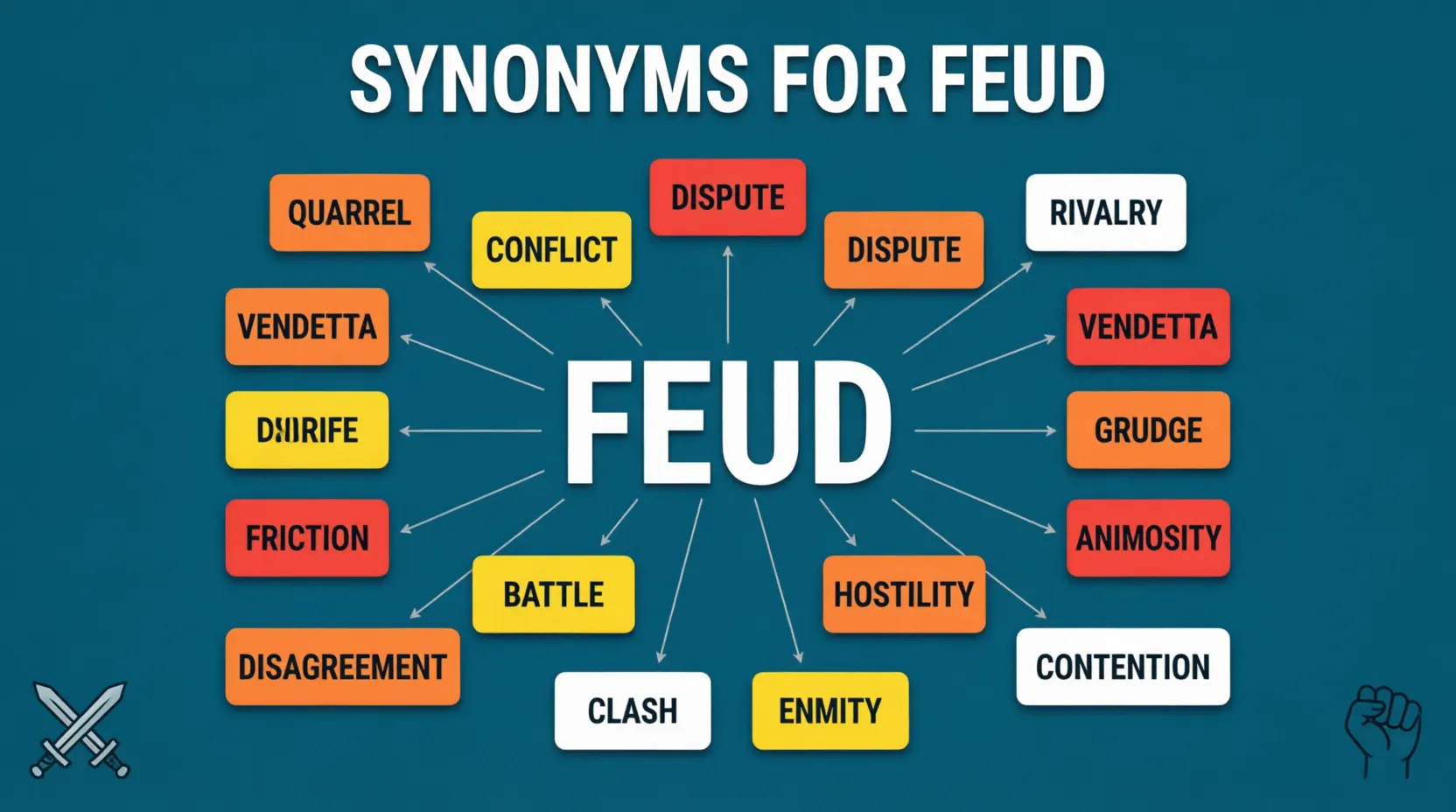
Looking for synonyms for feud can help you describe conflicts, disagreements, and rivalries with greater clarity and variety.
Words like conflict, dispute, quarrel, rivalry, clash, and disagreement can express different types of ongoing personal or group tensions.
Learning these alternatives improves vocabulary and makes your writing more natural, precise, and interesting in everyday communication and formal writing.
Whether writing an essay, story, or article, choosing the right synonym for feud helps communicate your meaning effectively.
Dispute
Meaning: A dispute is a serious disagreement between people.
Examples:
- The neighbors had a dispute about the fence.
- They solved the dispute peacefully.
Conflict
Meaning: Conflict is a serious disagreement between people or groups.
Examples:
- The conflict started over money.
- Both sides wanted to end the conflict.
Quarrel
Meaning: A quarrel is an angry argument between people.
Examples:
- The brothers had a quarrel yesterday.
- Their quarrel ended before dinner.
Argument
Meaning: An argument is a disagreement where people speak against each other.
Examples:
- We had an argument about the plan.
- Their argument became very loud.
Fight
Meaning: A fight is a serious disagreement between people.
Examples:
- The two friends had a fight.
- They talked after the fight was over.
Clash
Meaning: A clash is a strong disagreement between people or groups.
Examples:
- The teams had a clash over the rules.
- Their views often clash during meetings.
Strife
Meaning: Strife means serious disagreement or trouble between people.
Examples:
- The family lived through years of strife.
- Everyone hoped to end the strife.
Hostility
Meaning: Hostility means angry or unfriendly feelings toward someone.
Examples:
- There was hostility between the two groups.
- She tried to reduce the hostility.
Tension
Meaning: Tension is an uneasy feeling caused by disagreement.
Examples:
- There was tension during the meeting.
- The decision created tension at work.
Rivalry
Meaning: Rivalry is strong competition between people or groups.
Examples:
- The schools have a long rivalry.
- Their rivalry began many years ago.
Antagonism
Meaning: Antagonism means strong dislike or opposition between people.
Examples:
- Their antagonism was easy to notice.
- The meeting increased the antagonism.
Resentment
Meaning: Resentment is an angry feeling caused by unfair treatment.
Examples:
- He felt resentment after being ignored.
- Her resentment grew over time.
Enmity
Meaning: Enmity means strong dislike or hatred between people.
Examples:
- Their enmity lasted for years.
- The leaders wanted to end the enmity.
Discord
Meaning: Discord means disagreement or a lack of peace between people.
Examples:
- Discord grew inside the group.
- They worked together to remove the discord.
Friction
Meaning: Friction is disagreement that makes a relationship difficult.
Examples:
- There was friction between the coworkers.
- Small problems caused friction at home.
Wrangle
Meaning: A wrangle is a long and difficult argument.
Examples:
- The partners had a wrangle over the contract.
- Their wrangle delayed the final decision.
Altercation
Meaning: An altercation is a short and angry argument.
Examples:
- The two men had an altercation outside.
- The altercation ended after a few minutes.
Bickering
Meaning: Bickering means arguing repeatedly about small things.
Examples:
- The children kept bickering over the game.
- Their bickering annoyed everyone nearby.
Squabble
Meaning: A squabble is a small argument about something unimportant.
Examples:
- The siblings had a squabble over the remote.
- Their squabble ended quickly.
Controversy
Meaning: Controversy is strong disagreement about an issue.
Examples:
- The decision caused controversy online.
- The controversy continued for weeks.
Opposition
Meaning: Opposition means strong disagreement with someone or something.
Examples:
- The plan faced strong opposition.
- They showed opposition to the new rule.
Confrontation
Meaning: A confrontation is a direct meeting caused by disagreement.
Examples:
- He avoided a confrontation with his neighbor.
- The confrontation happened after lunch.
Grudge
Meaning: A grudge is an angry feeling that someone keeps for a long time.
Examples:
- She still holds a grudge against him.
- He decided to forget his old grudge.
Vendetta
Meaning: A vendetta is a long-lasting personal conflict with someone.
Examples:
- The two groups had a personal vendetta.
- Nobody wanted the old vendetta to continue.
Animosity
Meaning: Animosity means strong angry feelings toward another person.
Examples:
- Animosity grew between the two teams.
- They spoke without showing animosity.
Feuding
Meaning: Feuding means continuing to argue or fight with someone.
Examples:
- The neighbors have been feuding for months.
- The families stopped feuding after an agreement.
Estrangement
Meaning: Estrangement is a state where people become distant after conflict.
Examples:
- Their argument led to estrangement.
- Years of estrangement made their reunion difficult.
Bad Blood
Meaning: Bad blood means lasting angry feelings between people.
Examples:
- There has been bad blood between the families.
- They finally decided to forget the bad blood.
Hostile Relations
Meaning: Hostile relations mean unfriendly connections between people or groups.
Examples:
- The countries had hostile relations.
- They worked to improve their relations.
Disagreement
Meaning: A disagreement happens when people have different views.
Examples:
- They had a disagreement about the project.
- The disagreement did not last long.
Animosity
Meaning: Animosity is a strong feeling of dislike toward someone.
Examples:
- Their animosity was clear to everyone.
- Time helped reduce the animosity.
Conclusion
Learning synonyms for feud can make your writing and speaking more varied and clear. These words help students write better essays, while bloggers and content writers can avoid repeating the same terms. Daily English users can also describe disagreements more naturally. Practice these words in emails, essays, conversations, and everyday writing to build stronger vocabulary and communicate your ideas with confidence.