Finding the right synonyms for frugal can make your writing clearer, richer, and more expressive.
Frugal describes someone who uses money, resources, or supplies carefully without unnecessary spending or waste.
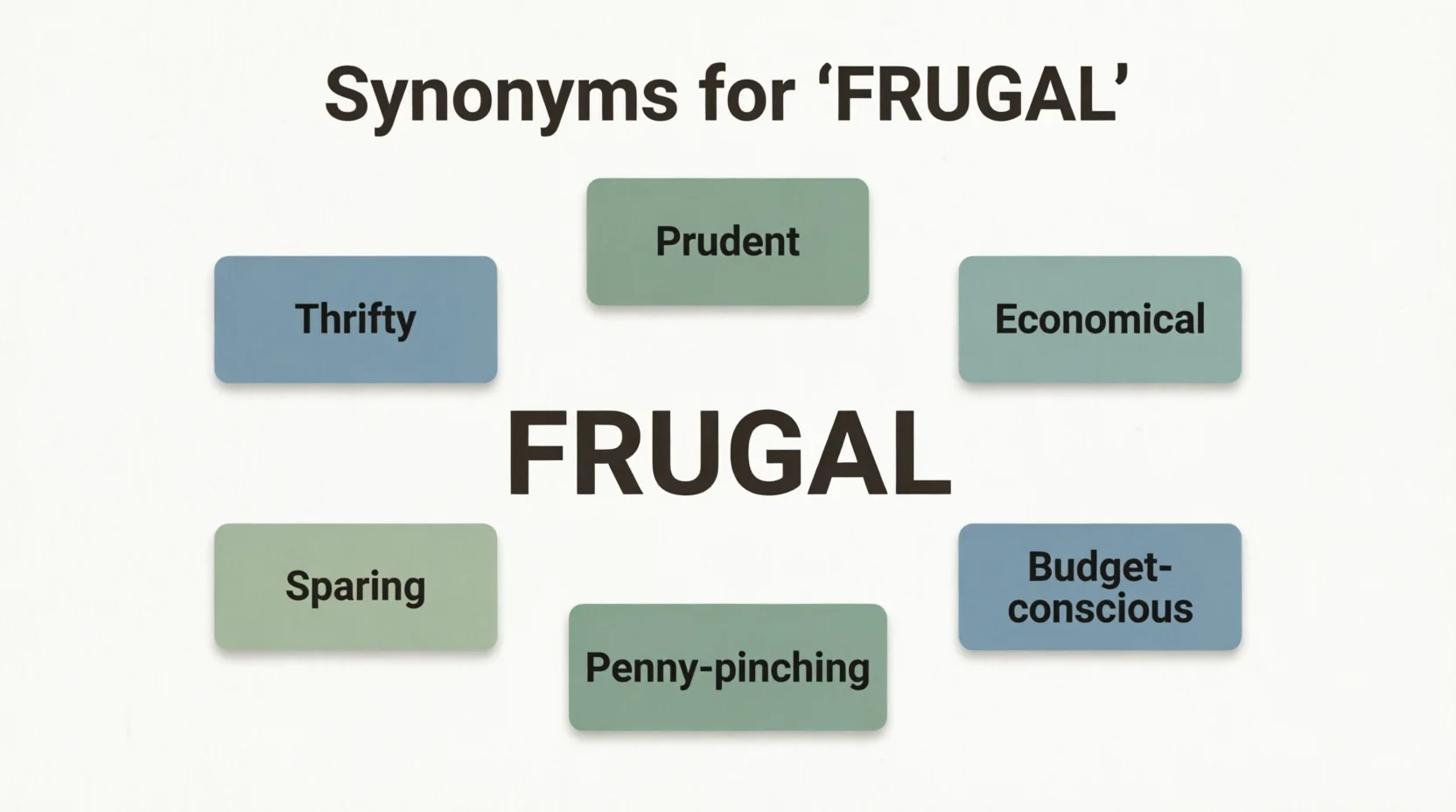
Common alternatives include economical, thrifty, sparing, prudent, budget-conscious, and economical, depending on the context.
These synonyms help writers describe careful spending habits while adding variety and precision to everyday communication.
Thrifty
Meaning: Thrifty means careful about spending money and avoiding waste.
Examples:
- My mother is very thrifty with money.
- He found a thrifty way to furnish his room.
Economical
Meaning: Economical means using money, time, or resources carefully.
Examples:
- This car is economical to drive.
- We chose an economical meal for dinner.
Sparing
Meaning: Sparing means using only a small amount of something.
Examples:
- She was sparing with her use of electricity.
- Be sparing when using expensive ingredients.
Saving
Meaning: Saving means keeping money instead of spending it.
Examples:
- Saving money can help you reach your goals.
- She started saving for a new bicycle.
Budget-Conscious
Meaning: Budget-conscious means careful about spending within a planned amount of money.
Examples:
- We are budget-conscious when planning trips.
- Budget-conscious shoppers compare prices first.
Cost-Conscious
Meaning: Cost-conscious means paying close attention to how much things cost.
Examples:
- Cost-conscious buyers often look for discounts.
- She is cost-conscious when buying groceries.
Careful
Meaning: Careful means thinking before spending or using something.
Examples:
- He is careful with his monthly income.
- She is careful about unnecessary purchases.
Economizing
Meaning: Economizing means trying to spend less or use fewer resources.
Examples:
- We are economizing by cooking at home.
- The family started economizing after moving.
Waste-Free
Meaning: Waste-free means using things carefully so little or nothing is wasted.
Examples:
- They follow a waste-free approach at home.
- A waste-free kitchen can save useful resources.
Minimalist
Meaning: Minimalist means choosing to live with fewer unnecessary things.
Examples:
- She has a minimalist home.
- His minimalist lifestyle helps him avoid extra spending.
Moderate
Meaning: Moderate means avoiding too much spending or use.
Examples:
- He takes a moderate approach to shopping.
- They keep their spending moderate each month.
Restrained
Meaning: Restrained means controlled and not excessive.
Examples:
- She showed restrained spending during the trip.
- His restrained lifestyle keeps his costs low.
Prudent
Meaning: Prudent means making wise and careful choices about money or resources.
Examples:
- It is prudent to save some money each month.
- She made a prudent financial decision.
Sensible
Meaning: Sensible means making practical choices that make good sense.
Examples:
- Buying a durable bag was a sensible choice.
- He takes a sensible approach to shopping.
Practical
Meaning: Practical means choosing what is useful instead of what is unnecessary.
Examples:
- She bought practical shoes for school.
- We chose a practical solution for the problem.
Resourceful
Meaning: Resourceful means finding smart ways to solve problems with what you have.
Examples:
- He is resourceful when money is limited.
- She found a resourceful way to reuse old boxes.
Low-Cost
Meaning: Low-cost means costing little money.
Examples:
- We planned a low-cost weekend activity.
- The store offers several low-cost products.
Inexpensive
Meaning: Inexpensive means not costing much money.
Examples:
- I found an inexpensive notebook.
- They chose an inexpensive hotel.
Cheap
Meaning: Cheap means costing little money, although it can sometimes suggest low quality.
Examples:
- He bought a cheap phone case.
- We found cheap snacks at the market.
Frugal-Minded
Meaning: Frugal-minded means naturally careful about spending money.
Examples:
- My brother is very frugal-minded.
- A frugal-minded person often plans purchases.
Money-Saving
Meaning: Money-saving means helping someone spend less money.
Examples:
- Cooking at home is a money-saving habit.
- She shared some money-saving ideas with us.
Cost-Effective
Meaning: Cost-effective means giving good value without costing too much.
Examples:
- This repair was a cost-effective choice.
- We found a cost-effective way to travel.
Value-Conscious
Meaning: Value-conscious means looking for good quality at a fair price.
Examples:
- Value-conscious shoppers compare different brands.
- She is value-conscious when buying clothes.
Tightfisted
Meaning: Tightfisted means unwilling to spend money, often more than is reasonable.
Examples:
- His tightfisted habits surprised his friends.
- The tightfisted owner rarely bought new equipment.
Stingy
Meaning: Stingy means unwilling to spend or share money.
Examples:
- The stingy customer refused to leave a fair tip.
- His stingy habits made group meals difficult.
Miserly
Meaning: Miserly means extremely unwilling to spend money.
Examples:
- His miserly habits became a family joke.
- The miserly manager refused to replace broken supplies.
Parsimonious
Meaning: Parsimonious means very careful about spending money or using resources.
Examples:
- The company took a parsimonious approach to expenses.
- His parsimonious habits helped him save for years.
Abstemious
Meaning: Abstemious means avoiding too much use or enjoyment of something.
Examples:
- She follows an abstemious approach to unnecessary spending.
- His abstemious lifestyle keeps his daily costs low.
Frugal
Meaning: Frugal means using money and resources wisely without unnecessary waste.
Examples:
- We live a frugal lifestyle to save for the future.
- Her frugal habits help her manage her budget.
Conclusion
Learning synonyms for frugal can make your writing more varied and precise. Words such as thrifty, economical, prudent, practical, and cost-conscious can describe careful spending in different ways. Students can use them in essays, while bloggers and content writers can use them in money and lifestyle topics. Practice these words in emails, essays, and daily conversations. With regular practice, you can choose the right synonym naturally and improve your communication skills.