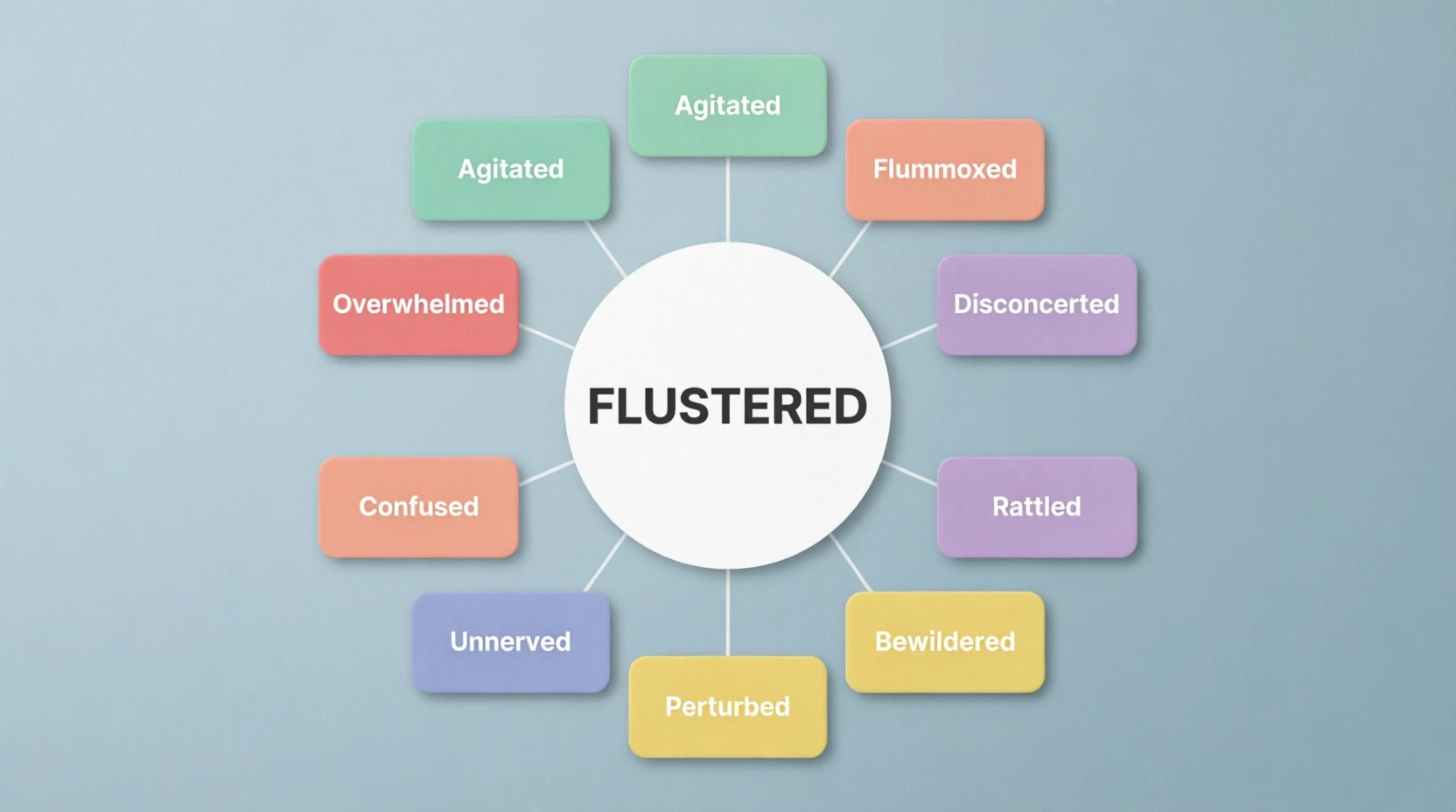
Finding the right synonyms for flustered can improve your English vocabulary and help you express nervousness, confusion, or embarrassment more clearly in everyday situations.
Words like nervous, anxious, rattled, unsettled, agitated, and confused can describe similar feelings, but each carries a slightly different meaning and emotional tone.
Learning these alternatives can make your conversations, essays, stories, and creative writing more natural, varied, and engaging while avoiding unnecessary repetition.
In this guide, you will discover useful synonyms for flustered with simple meanings and examples, making them easy for students, writers, and English learners to understand.
Agitated
Meaning: Agitated means feeling worried, upset, or unable to stay calm.
Examples:
- The loud noise made Tom agitated.
- She looked agitated before the meeting.
Nervous
Meaning: Nervous means feeling worried about what may happen.
Examples:
- I felt nervous before my speech.
- Mia was nervous about her test.
Confused
Meaning: Confused means not knowing what to think or do.
Examples:
- Jake looked confused by the new rules.
- I was confused by the sudden change.
Rattled
Meaning: Rattled means feeling upset or less confident after something unexpected.
Examples:
- The sudden question left me rattled.
- She seemed rattled after the mistake.
Frazzled
Meaning: Frazzled means feeling tired, worried, and unable to think clearly.
Examples:
- Mom felt frazzled after a busy morning.
- I was frazzled by all the homework.
Flustered
Meaning: Flustered means feeling nervous or confused and having trouble thinking clearly.
Examples:
- He became flustered when everyone watched him.
- Sarah got flustered during the interview.
Flummoxed
Meaning: Flummoxed means very confused about what to do.
Examples:
- The tricky puzzle left me flummoxed.
- Ben was flummoxed by the strange question.
Bewildered
Meaning: Bewildered means very confused by something hard to understand.
Examples:
- The new student looked bewildered.
- I felt bewildered by the long instructions.
Befuddled
Meaning: Befuddled means confused and unable to think clearly.
Examples:
- The complicated map left us befuddled.
- Mark seemed befuddled after reading the message.
Perplexed
Meaning: Perplexed means confused because something is difficult to understand.
Examples:
- She was perplexed by his answer.
- The strange result left me perplexed.
Disconcerted
Meaning: Disconcerted means feeling uneasy because something unexpected happened.
Examples:
- The sudden silence made him disconcerted.
- I felt disconcerted by the strange reply.
Perturbed
Meaning: Perturbed means feeling worried or bothered by something.
Examples:
- The delay left her perturbed.
- Dad seemed perturbed by the news.
Unnerved
Meaning: Unnerved means losing confidence because something makes you nervous.
Examples:
- The dark room unnerved Kevin.
- I was unnerved by the sudden shout.
Shaken
Meaning: Shaken means feeling upset or nervous after a surprising event.
Examples:
- She was shaken by the unexpected news.
- The experience left him shaken.
Embarrassed
Meaning: Embarrassed means feeling uncomfortable because of something awkward.
Examples:
- I felt embarrassed when I forgot her name.
- Leo was embarrassed after dropping his books.
Upset
Meaning: Upset means feeling unhappy, worried, or bothered.
Examples:
- She was upset about the missed bus.
- I felt upset after losing my notes.
Anxious
Meaning: Anxious means feeling worried or nervous about something.
Examples:
- He felt anxious before the results came out.
- Nina was anxious about her first day.
Distracted
Meaning: Distracted means unable to focus because your thoughts are elsewhere.
Examples:
- I was distracted by the loud music.
- Sam seemed distracted during class.
Muddled
Meaning: Muddled means confused and not thinking in a clear way.
Examples:
- My thoughts were muddled after the long day.
- She gave a muddled answer to the question.
Unsettled
Meaning: Unsettled means feeling worried or uncomfortable.
Examples:
- The strange sound made me unsettled.
- He felt unsettled before the trip.
Discomposed
Meaning: Discomposed means losing your calm because of something unexpected.
Examples:
- The sudden complaint left her discomposed.
- He looked discomposed after hearing the news.
Troubled
Meaning: Troubled means feeling worried about a problem.
Examples:
- She looked troubled by the decision.
- I felt troubled after the conversation.
Disturbed
Meaning: Disturbed means feeling upset because something has caused concern.
Examples:
- The strange message disturbed him.
- She was disturbed by the sudden change.
Frantic
Meaning: Frantic means extremely worried and rushing to deal with something.
Examples:
- We became frantic when the train was delayed.
- She made a frantic search for her phone.
Harried
Meaning: Harried means feeling stressed because of too many things to handle.
Examples:
- The harried teacher rushed between classes.
- I felt harried during the busy afternoon.
Panicked
Meaning: Panicked means suddenly feeling very afraid or worried.
Examples:
- He panicked when he could not find his wallet.
- I panicked when I saw the missed deadline.
Overwhelmed
Meaning: Overwhelmed means feeling unable to handle everything at once.
Examples:
- She felt overwhelmed by her schoolwork.
- I was overwhelmed by the number of tasks.
Thrown Off
Meaning: Thrown off means feeling confused because something changed your plan.
Examples:
- The sudden change threw me off.
- His unexpected question threw me off.
At a Loss
Meaning: At a loss means not knowing what to say or do.
Examples:
- I was at a loss for words.
- She was at a loss about what to do next.
Hurried
Meaning: Hurried means doing something quickly because there is little time.
Examples:
- He gave a hurried answer before leaving.
- I made a hurried decision that morning.
Hectic
Meaning: Hectic means full of busy activity, stress, and little time to relax.
Examples:
- Monday was hectic at the office.
- Our morning became hectic after the alarm failed.
Conclusion
Learning synonyms for flustered gives you more ways to express nervousness, confusion, and stress. These words can make your writing clearer and more interesting. Students can use them in essays, while bloggers and writers can avoid using the same word again and again. Daily English users can also use these terms in emails, conversations, and messages. Practice a few new words each day, and soon you will feel more confident using different expressions in your everyday communication.